 Research · 2026-10-30
A Confidence Percentage Is Not Proof of Calibration in Neurofinance
Primary work in machine-learning calibration shows why a numerical confidence score requires a defined outcome and genuinely independent testing.
 NSI.GOLDStart HereTopicsResearch libraryNSI Indicator
Primary research, neuroscience, neurofinance and critical analysis of the proposed NSI framework.
21 articles
Research · 2026-10-30Primary work in machine-learning calibration shows why a numerical confidence score requires a defined outcome and genuinely independent testing.
 Research · 2026-10-30
Research on respiratory influences and measurement reliability limits the interpretation of wearable HRV as a nervous-system state label.
 Research · 2026-10-30
Time-dependent validation, nested tuning and session boundaries determine whether a promising model genuinely generalizes to future behavior.
 Research · 2026-10-30
EEG studies of response conflict and cognitive control reveal the difference between observing an oscillation and validating a market-facing interpretation.
 Research · 2026-10-29
How statistical power, flexible analyses and independent replication affect confidence in proposed NSI findings.
 Research · 2026-10-29
How illumination, attention and cognitive demand can all affect pupil size, and why the signal is not a validated fear detector.
 Research · 2026-10-29
Why holding out trials is not the same as testing on entirely new people, and what reliable NSI validation would require.
 Research · 2026-10-29
Why proposed NSI dimensions need convergent, discriminant and predictive validation before they can be treated as scientific measurements.
 Research · 2026-10-28
An association between physiology and behavior does not establish the effect of changing physiology. Causal research starts with explicit assumptions.
 Research · 2026-10-28
A model can appear accurate because its inputs contain information that would not exist at prediction time. Proper separation begins before fitting.
 Research · 2026-10-28
A promising association can emerge from a large analytical search. The search itself must be visible before the result can be interpreted.
 Research · 2026-10-28
A timestamped plan can distinguish a prediction from an explanation developed after seeing data. It cannot make a weak study strong by itself.
 Research · 2026-10-27
A rigorous validation roadmap for the proposed five-dimensional NSI framework, covering operational definitions, preregistration, baseline comparisons and external replication.
 Research · 2026-10-27
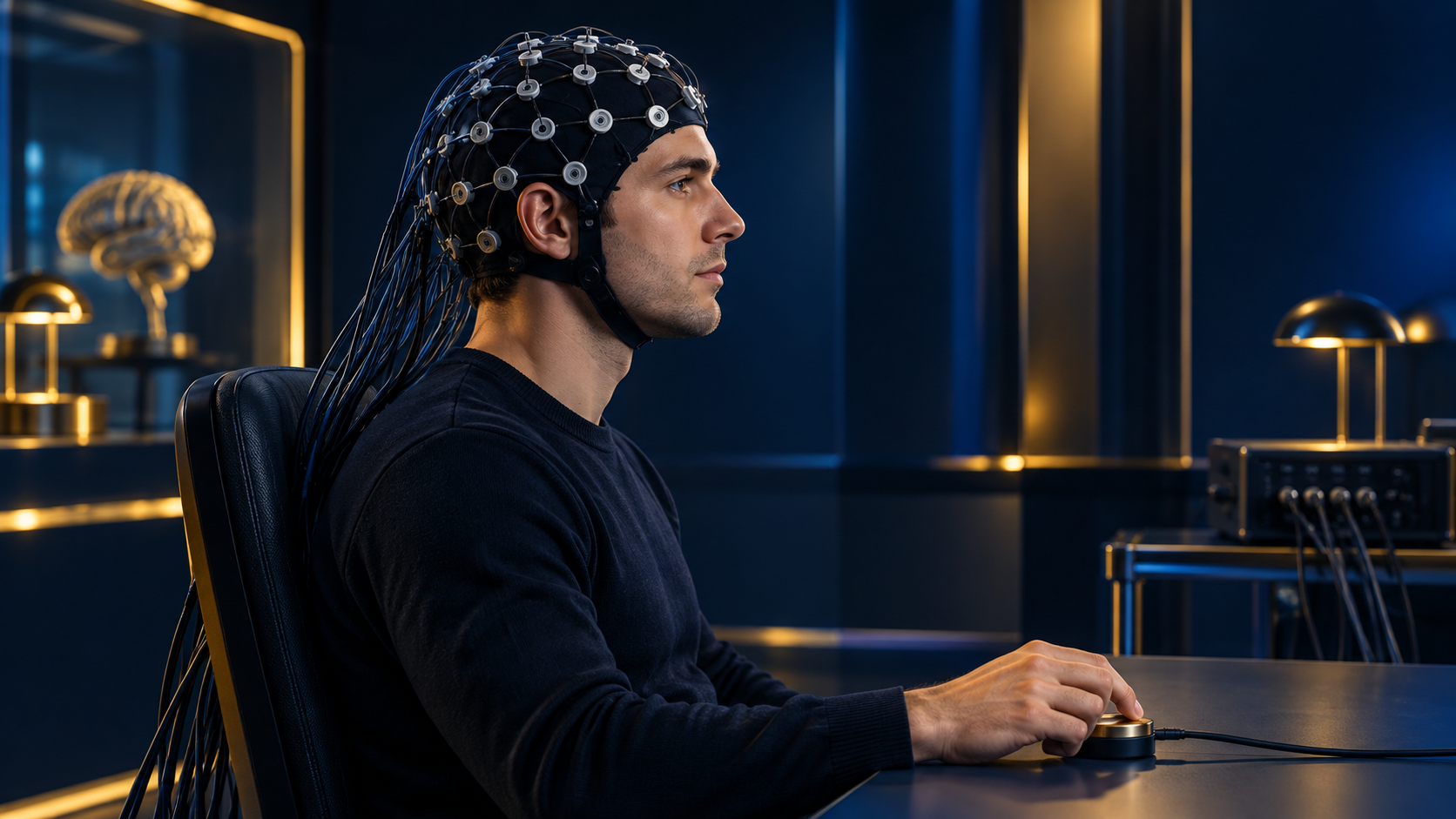
How EEG error-related potentials are studied, why trading-rule violations require independent definitions and what validation must precede any NSI biomarker claim.
 Research · 2026-10-27
Why electrodermal activity tracks aspects of arousal but cannot identify fear or greed without independent context, behavioral labels and proper validation.
 Research · 2026-10-27
A technical research protocol explaining why HRV cannot independently diagnose fear, and how to evaluate physiology against behavioral baselines with transparent measurement.
 Research · 2026-10-26
The October 27–28 FOMC meeting provides a scheduled event, not a prediction. This NSI daily edition separates verified market context, physiological research and the hypotheses needed to study decision consistency.
 Research · 2026-10-25
Why does financial loss feel personal? Explore threat processing, the neuroscience of fear, XAU/USD risk and the proposed NSI Threat Response dimension.
 Research · 2026-10-25
Discover why profitable trades can still be bad decisions. Explore outcome bias, trading discipline, risk management and NSI decision research.
 Research · 2026-10-25
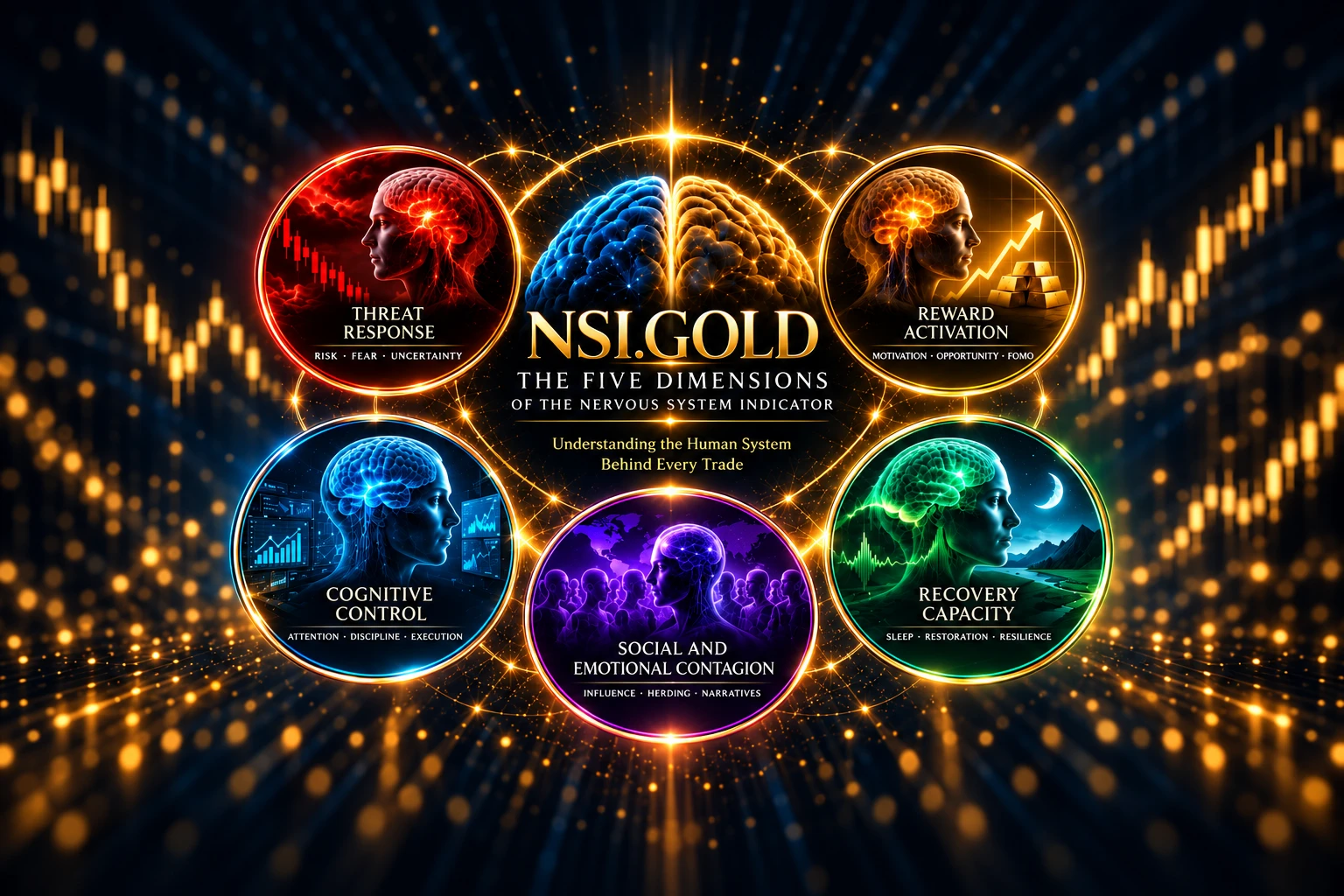
Explore the five dimensions of the Nervous System Indicator (NSI) and how neuroscience, psychology, and human behavior influence gold trading decisions.
 Research · 2026-10-25
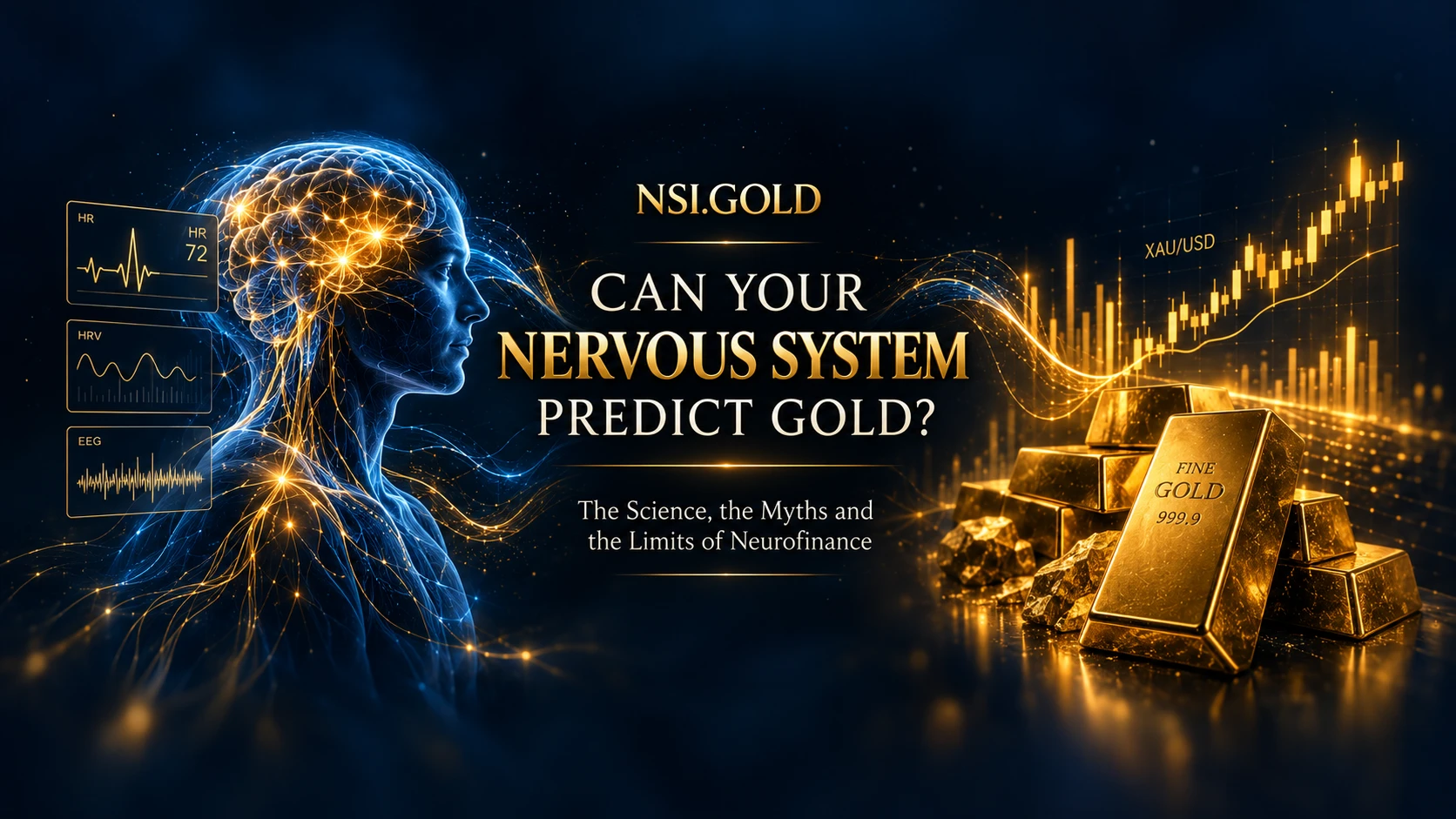
Can your nervous system predict gold? Explore neuroscience, trader physiology, XAU/USD price drivers and the scientific limits of NSI research.
Explore the five proposed NSI dimensions · Research methodology · The Gold Nervous System Indicator