
NSI Market Intelligence | October 25, 2026
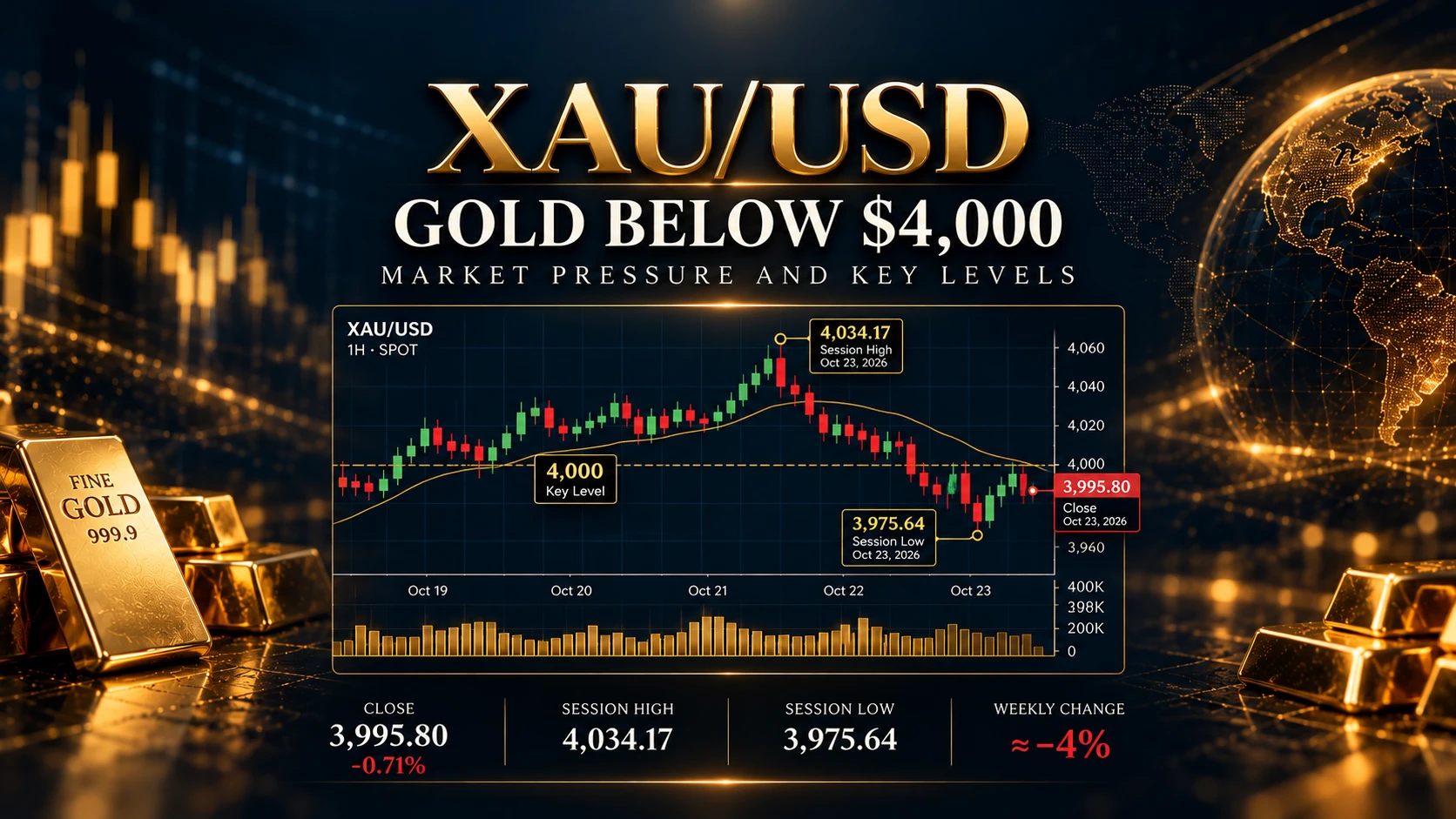
Gold entered the final week of October under significant selling pressure. The market that had previously attracted attention through its capacity to preserve value during periods of uncertainty was now confronting a different combination of forces: persistent inflation concerns, elevated energy prices, changing expectations for Federal Reserve policy and the possibility that investors were selling liquid assets to satisfy financial obligations elsewhere. By Friday, October 23, spot XAU/USD had fallen below the psychologically important $4,000 level. The indicative daily closing price was approximately $3,995.80 per troy ounce, with a session range extending from $3,975.64 to $4,034.17. The weekly decline was approximately 4%. These observations describe a market under pressure. They do not independently establish that the entire market was experiencing panic, fear or a collective neurological response. For NSI Market research, that distinction is fundamental.
The Meaning of the $4,000 Breakdown.
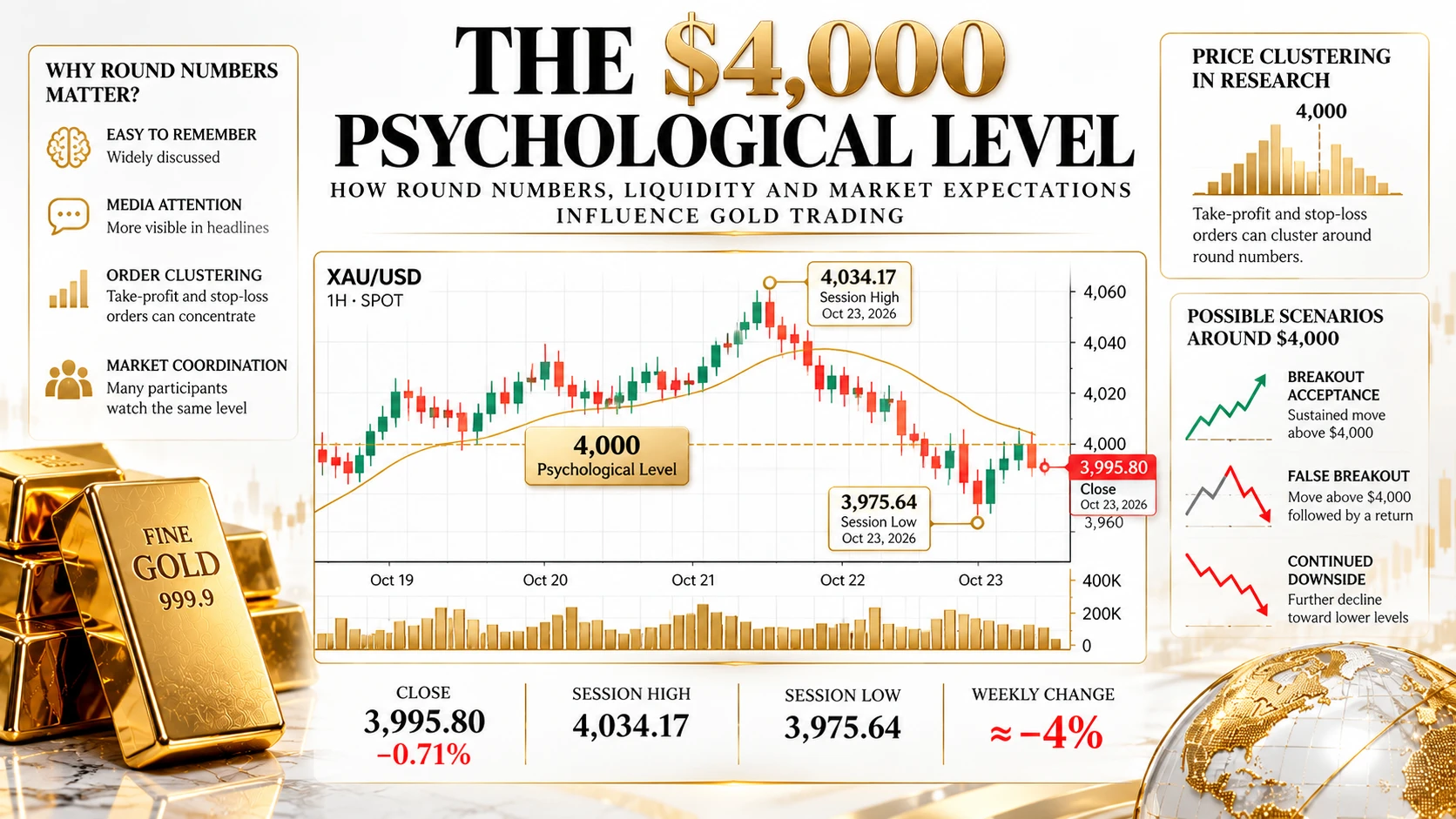
A round-number price level can acquire significance because market participants use it when discussing forecasts, placing orders and evaluating recent performance. Its importance is not necessarily derived from any intrinsic economic property of the number. The $4,000 level became particularly relevant as gold approached it following a sustained decline. Crossing such a level can attract additional attention from technical traders, discretionary participants and automated strategies. However, the existence of a psychologically recognizable price does not guarantee a specific market response. The important question is whether the break produces a sustained change in market structure. A temporary move below $4,000 followed by a rapid recovery would carry different implications from repeated failures to reclaim the level. Similarly, a break accompanied by deteriorating liquidity and persistent selling would require a different interpretation from an isolated movement occurring under ordinary trading conditions. For the next session, the distinction between rejection, acceptance and recovery around the level deserves more attention than the round number itself.
The Macroeconomic Pressure Behind the Decline
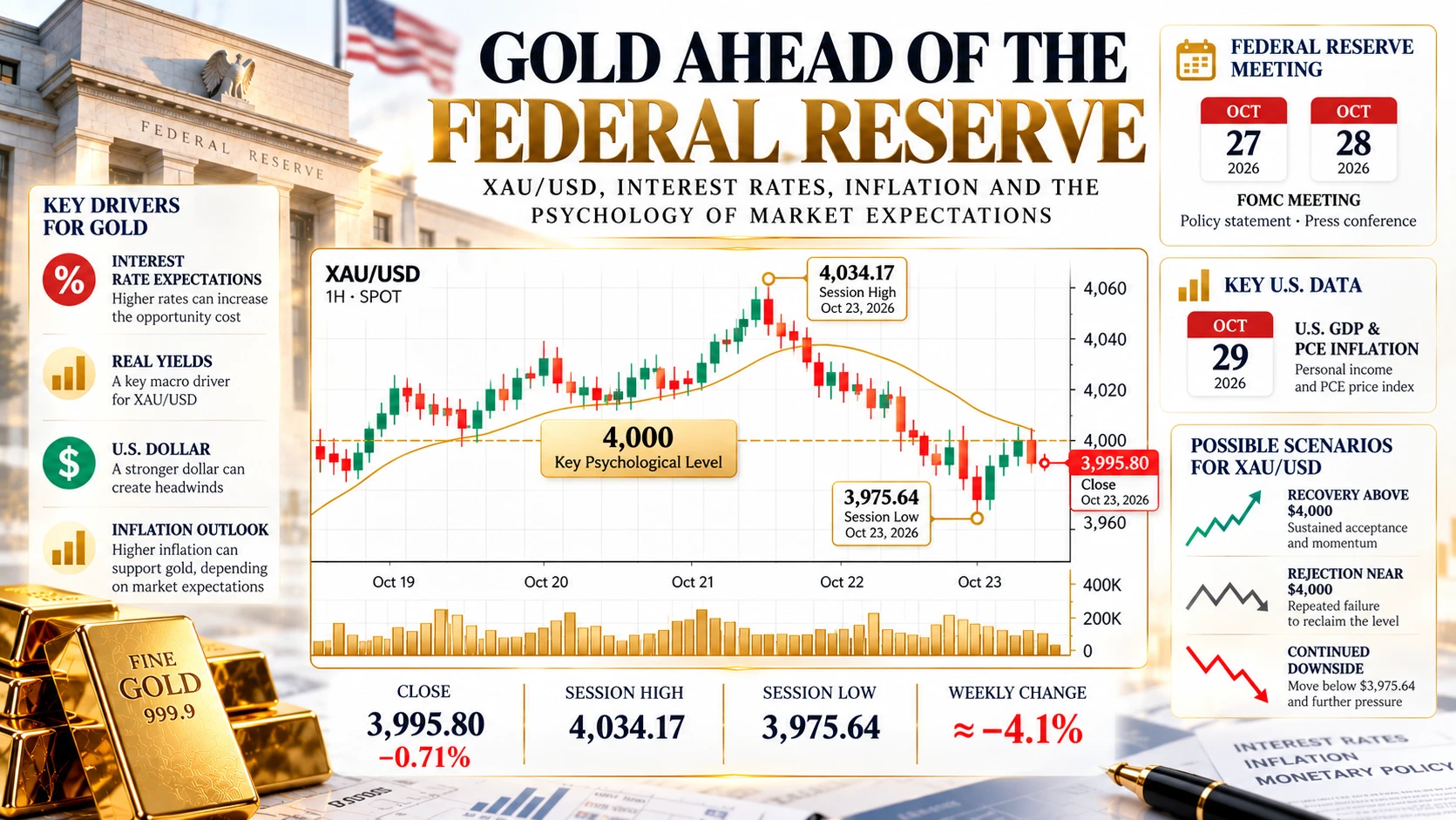
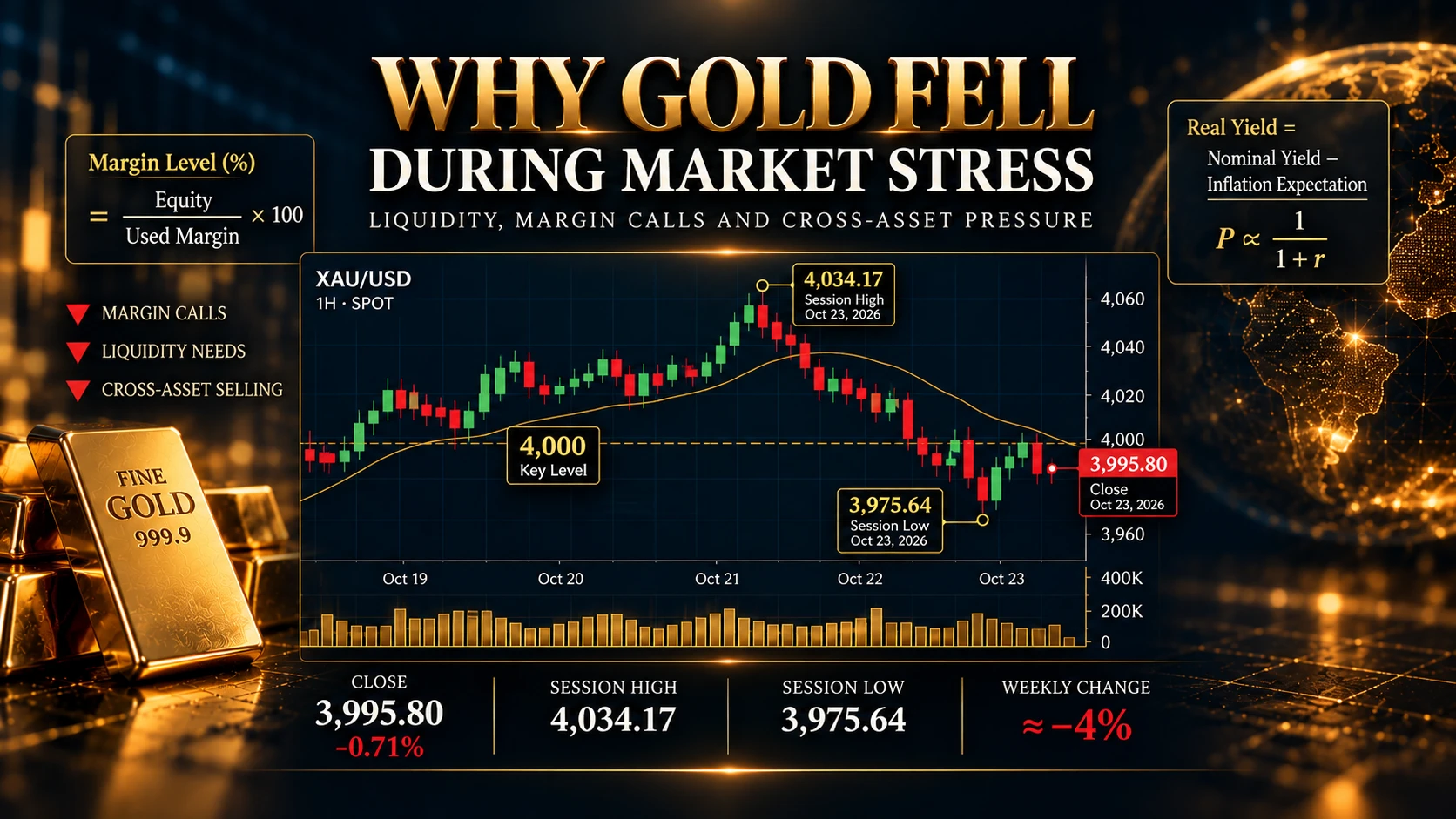
The recent decline occurred as higher energy prices contributed to concerns about persistent inflation. When inflation expectations increase, investors may anticipate a more restrictive monetary-policy environment. Higher expected interest rates can increase the opportunity cost of holding gold, which does not provide a contractual yield. Changes in the U.S. dollar and Treasury yields can reinforce or complicate these relationships. However, gold does not respond mechanically to one variable. It can appreciate during certain inflationary environments and decline during others, depending on real yields, monetary expectations, liquidity and the broader demand for defensive assets. The October selloff illustrates why simplistic narratives such as "inflation always supports gold" can be misleading. The market responds to the interaction among economic variables, not to isolated headlines.
What NSI Market Can Actually Observe
Within the proposed NSI Market framework, this episode provides an opportunity to examine observable conditions associated with financial pressure. The first variable is the magnitude and persistence of the price decline. The second is the change in volatility relative to previous sessions. The third concerns the market's response to important reference levels. The fourth is the relationship between gold, Treasury yields, the U.S. dollar and other assets. These observations may support an experimental classification such as Elevated Market Pressure. They do not establish the emotional condition of individual traders. A declining market does not prove fear. A rapid recovery does not prove greed. Price movement alone cannot reveal whether participants are closing positions voluntarily, following systematic strategies or responding to margin requirements. The distinction between measurable conditions and inferred psychological motives must remain explicit.
The Next Trading Session: Three Conditional Scenarios
The first scenario involves a sustained recovery above $4,000. Such a move would indicate that the previous breakdown had not yet produced durable acceptance below the level. Further confirmation would be needed before interpreting it as a broader reversal. The second scenario involves repeated rejection near $4,000. This would suggest that the former reference level is functioning as an area of renewed selling pressure. The third scenario involves additional weakness beneath Friday's session low near $3,975.64. That would indicate continuation beyond the latest observed downside reference, although the size and persistence of any subsequent movement cannot be predicted from the level alone. These are conditional scenarios, not trade instructions or probability forecasts.
NSI Interpretation: Market Pressure Is Not Collective Fear
The most important contribution of NSI Market should be the separation of observable financial conditions from psychological explanations. A market decline can create environments in which individual traders face increased uncertainty, changing execution costs and greater pressure to reconsider positions. Whether those conditions actually produce behavioral mistakes depends on the trader, the strategy and the information available at the time. A scientifically responsible model should identify market pressure without claiming to measure a global nervous-system state.
Conclusion
Gold's decline below $4,000 is important because it combines a visible technical event with changing macroeconomic conditions. The price movement is observable. The associated volatility can be measured. The macroeconomic explanations can be investigated. What cannot be concluded from the chart alone is that traders collectively experienced fear, lost cognitive control or entered a particular psychological state. The next trading session should be evaluated through market structure, liquidity, price behavior and the response to new information. The breakdown below $4,000 is a financial observation. Understanding its consequences requires evidence, not an invented psychological diagnosis.
Gabriel Nicolaev – CyGuru
Research Sources
-
Reuters. (October 23, 2026). Gold set for steep weekly loss as rising oil prices bolster Fed rate hike bets.
-
Investing.com. XAU/USD Historical Data, October 19–23, 2026.
-
GoldPrice.com. (October 23, 2026). Gold Price on October 23, 2026.
Research and Financial Note: NSI Market is a proposed analytical framework. Its behavioral classifications are not independently validated measures of investor emotions. This article is educational and does not constitute investment advice.
 Market
 Market
 Market