

The research question: can a description change a response?
A person noticing tension before a decision may immediately interpret it as evidence that something is wrong with the market. Affect labeling offers a different object of attention: describing the emotional experience itself. The research question is whether naming an emotion changes subsequent responding, and, if so, which response changes. It does not ask whether the label predicts an asset price. 'I feel anxious' is a report about an experience; 'gold will fall' is a market proposition requiring independent evidence. Lieberman and colleagues studied affect labeling with functional brain imaging while participants processed emotional images. They observed differences in neural responses between labeling and comparison conditions, including reduced amygdala responses under the studied task. [1] This finding supports a specific experimental relationship. It does not mean that a person can read their own amygdala activity from a word, that emotional language always reduces distress, or that a short label switches off a single brain system responsible for financial mistakes.
Physiological and subjective effects need not agree
Kircanski, Lieberman and Craske compared affect labeling with other conditions during brief exposure involving spider-fearful participants. At follow-up, outcomes differed across physiological, behavioral and self-report measures; the labeling group did not show an equivalent advantage on every measure. [2] This is a useful warning against treating 'emotion improved' as one simple outcome. A study can support a change in a particular response while leaving the participant's reported feeling unchanged. The distinction should remain visible when the result is explained to a general audience. Tabibnia and colleagues examined labels paired with threatening images and later autonomic responses. [3] Their findings concern a particular exposure procedure and stimulus context, not a general instruction to attach any word to any feeling. Together, these studies justify interest in language as part of emotion research while limiting claims about transfer. They did not test gold-market forecasts, broker execution or financial returns. Any application to trading journals is therefore a proposed extension rather than an already demonstrated performance method.
Keep the feeling, interpretation and action in separate sentences
A hypothetical journal entry could distinguish three elements: the experienced feeling, the explanation the person currently gives it, and the action they are considering. For example, a person might report unease, attribute it to an approaching announcement and consider cancelling an order. Separating those statements makes the reasoning inspectable. It does not determine whether cancellation is appropriate. The market evidence and the written decision criteria still need their own evaluation, even if the feeling becomes easier to describe. This distinction connects to why skin conductance cannot reveal fear by itself. Neither a physiological signal nor an emotion word establishes the complete psychological state of a person, much less the state of a market. Labels can be uncertain or change over time. A useful record can preserve that uncertainty, allowing 'unclear' or a description of bodily sensation rather than demanding a confident category. Forcing a label may create apparent precision without improving understanding.
How to test a journal practice without overstating it
A study could compare a brief affect-labeling prompt with a neutral descriptive prompt before a simulated decision. It should define in advance whether the primary outcome is subjective distress, rule adherence, response time or another measure. Financial outcomes alone would be difficult to interpret because the simulated market path can reward poor reasoning by chance. The study should also examine whether the prompt distracts participants or adds time pressure. A plausible intervention deserves evaluation of costs as well as hoped-for benefits. Researchers would need to separate the effect of labeling from the effect of simply pausing. If both groups stop for the same interval but receive different prompts, the comparison is more informative than comparing a reflective procedure with uninterrupted action. Scoring should not reward the use of emotionally sophisticated vocabulary by itself. The relevant question is whether the intervention changes a prespecified outcome, and whether that change persists across tasks and participants rather than appearing only in a selected subgroup.
The relationship between slow breathing, HRV and decision readiness offers a parallel caution: a change in one response is not proof of broad decision improvement. NSI is a proposed interdisciplinary framework, not a clinically or financially validated system. Affect labeling could be one carefully bounded research question within it. It should not be marketed as a therapeutic substitute, a guaranteed calming technique or a method for converting emotional sensations into buy and sell signals. The conclusion is that naming an emotion may create a useful distinction between an internal experience and a claim about external events. Primary studies make that distinction worth investigating, but they do not validate a trading application. A strong educational practice describes the evidence, preserves uncertainty and assesses the decision process independently. The aim is clearer observation and reasoning, not the elimination of every uncomfortable feeling before action.
Scientific bibliography & sources
- [1] Lieberman, M. D., et al. (2007). Putting feelings into words: affect labeling disrupts amygdala activity in response to affective stimuli. Psychological Science. https://pubmed.ncbi.nlm.nih.gov/17576282/
- [2] Kircanski, K., Lieberman, M. D., & Craske, M. G. (2012). Feelings into words: contributions of language to exposure therapy. Psychological Science. https://pmc.ncbi.nlm.nih.gov/articles/PMC4721564/
- [3] Tabibnia, G., Lieberman, M. D., & Craske, M. G. (2008). The lasting effect of words on feelings. Emotion. https://pmc.ncbi.nlm.nih.gov/articles/PMC4727455/
Research note
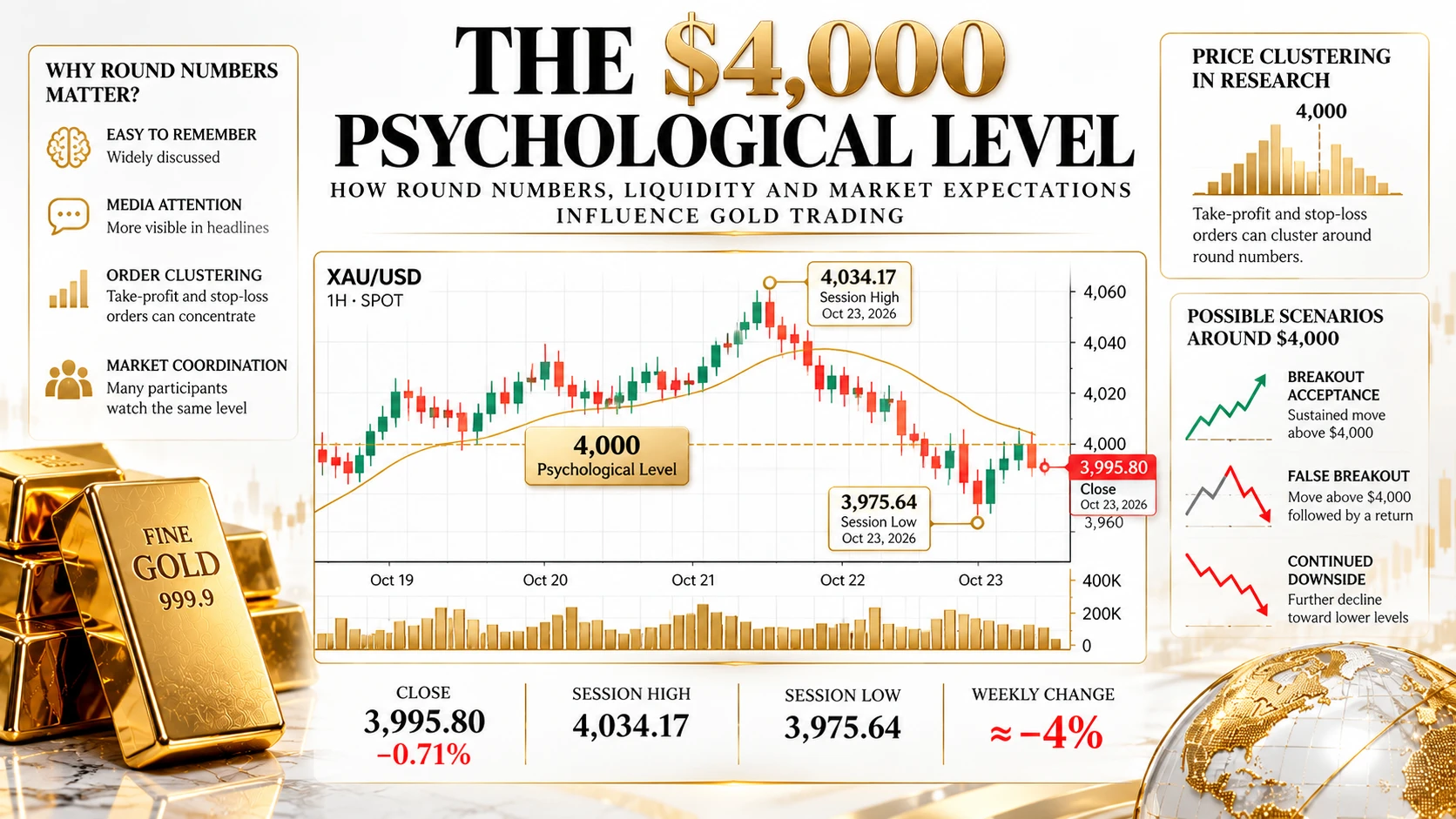
NSI is a proposed research framework, not an independently validated medical or financial prediction system. This article is research and education, not individualized medical or investment advice. Market observations are timestamped historical context, not live prices.
 Market
 Market
 Research