

The seduction of a simple physiological signal
A person feels calm while considering a large trade. Does this mean the decision is good? The question sounds measurable because heart rate is easy to observe, but physiological calm, accurate recognition of bodily signals and objectively defensible choices are separate constructs. A slow pulse can accompany concentration, recovery, familiarity or medication effects; a faster pulse can accompany exercise, excitement or threat. Even when the measurement is accurate, it does not directly encode the quality of an investment thesis. Using a wearable reading as a certification of judgment crosses several unsupported inferential steps. Primary interoception research is particularly valuable because it reveals the differences among the things often grouped under 'listening to your body' [1].
The NSI research question should therefore be operational rather than promotional: does a defined physiological measure add information about whether a person follows a prespecified decision rule, after accounting for baseline behavior and context? That is not equivalent to asking whether people who report feeling calm earn more money. Profit is affected by market movements, exposure, luck and trading costs; calmness can be measured in different ways. A valid analysis would separate decision process from outcome before trying to relate either to bodily signals.
Heartbeat performance is not the same as confidence
Garfinkel and colleagues tested distinctions among interoceptive accuracy, subjective sensibility and metacognitive awareness [1]. Their empirical work found that these dimensions are not interchangeable. One participant might confidently report noticing internal sensations yet perform poorly on a specific heartbeat task; another might perform better without equally calibrated confidence. This matters when a proposed dashboard asks people to rate their bodily state. A self-report can capture experience, but it cannot automatically substitute for a sensor, a validated behavioral task or a physiological mechanism. Each measure requires its own error model and interpretation.
Critchley and colleagues used an interoceptive task with brain imaging and associated performance with activity in regions including the anterior insula [2]. Their findings concern a defined laboratory task and neural correlates; they did not demonstrate that an insula response identifies profitable trades. The presence of a brain correlate can help generate hypotheses about awareness and emotion, but it does not prove that a wearable can infer complex financial outcomes. The distance from task-specific neural observation to an applied consumer metric is substantial. It involves hardware validity, person-to-person generalization, context sensitivity and behavioral endpoints.
The historical somatic-marker debate deserves precision
Bechara and colleagues examined decision behavior and physiological responses in a gambling task involving participants with and without certain prefrontal injuries [3]. The work helped motivate hypotheses about anticipatory bodily responses during complex choice. Yet the task differs fundamentally from a transparent market with explicit prices, external news and adversarial competition. A laboratory participant learning payoff patterns does not face the same environment as a professional managing XAU/USD exposure. Moreover, subsequent scientific debates concern how strongly physiological anticipation and conscious knowledge should be interpreted. It would be inaccurate to describe the original experiment as a ready-made trading algorithm. An elevated autonomic response might indicate salience rather than error. If a trader recognizes a high-stakes situation accurately, arousal may increase even while the decision remains appropriate. Likewise, low arousal during a repeated risky habit might signify familiarity rather than discipline. To infer that lower arousal equals better choice imposes a monotonic relationship that the cited experiments do not establish. The shape of any association, including whether it changes with experience or task difficulty, is an empirical question.
A research design that respects what sensors can measure
A practical study could synchronize continuous pulse measurements, a separately validated interoception task, self-rated bodily awareness and behavioral risk-rule outcomes. It would include rest, movement, caffeine use and recording quality as potential confounds. Events should be timestamped before the outcome is known, and participant-level effects must be distinguished from differences between individuals. A prediction claim would require performance on unseen people or later periods, depending on its stated purpose. An attractive correlation in a small sample is neither an individual diagnosis nor evidence of superior trade selection. Researchers should also question whether pulse adds anything after accounting for simpler variables. The baseline might include previous rule adherence, task difficulty, time since the last break and visible market volatility. Any new physiological metric should demonstrate incremental usefulness, not merely correlate with a condition already observable from market data. Ethical safeguards matter because a person's physiological stream can reveal sensitive patterns. Consent, purpose limitation and secure handling should precede any real-data program. A public reflection exercise can instead remain explicitly self-reported and educational without implying that it measures internal physiology.
Conclusion: informative signals, narrow claims
The evidence justifies studying the body as one component of human decisions. It does not justify a red-green pulse indicator that declares financial choices safe or unsafe. Interoceptive accuracy, belief about one's own accuracy, arousal and final action are different variables, and each can vary independently [1][2][3]. NSI.GOLD should preserve those distinctions when discussing nervous-system ideas. The NSI framework is a proposed interdisciplinary model, not a clinically approved instrument and not a validated system for forecasting gold or evaluating an individual trader.
Scientific bibliography & sources
- [1] Garfinkel SN et al., Knowing your own heart: distinguishing interoceptive accuracy from interoceptive awareness, Biological Psychology (2015). https://pubmed.ncbi.nlm.nih.gov/25451381/
- [2] Critchley HD et al., Neural systems supporting interoceptive awareness, Nature Neuroscience (2004). https://pubmed.ncbi.nlm.nih.gov/14730305/
- [3] Bechara A et al., Deciding advantageously before knowing the advantageous strategy, Science (1997). https://pubmed.ncbi.nlm.nih.gov/9036851/
Research note
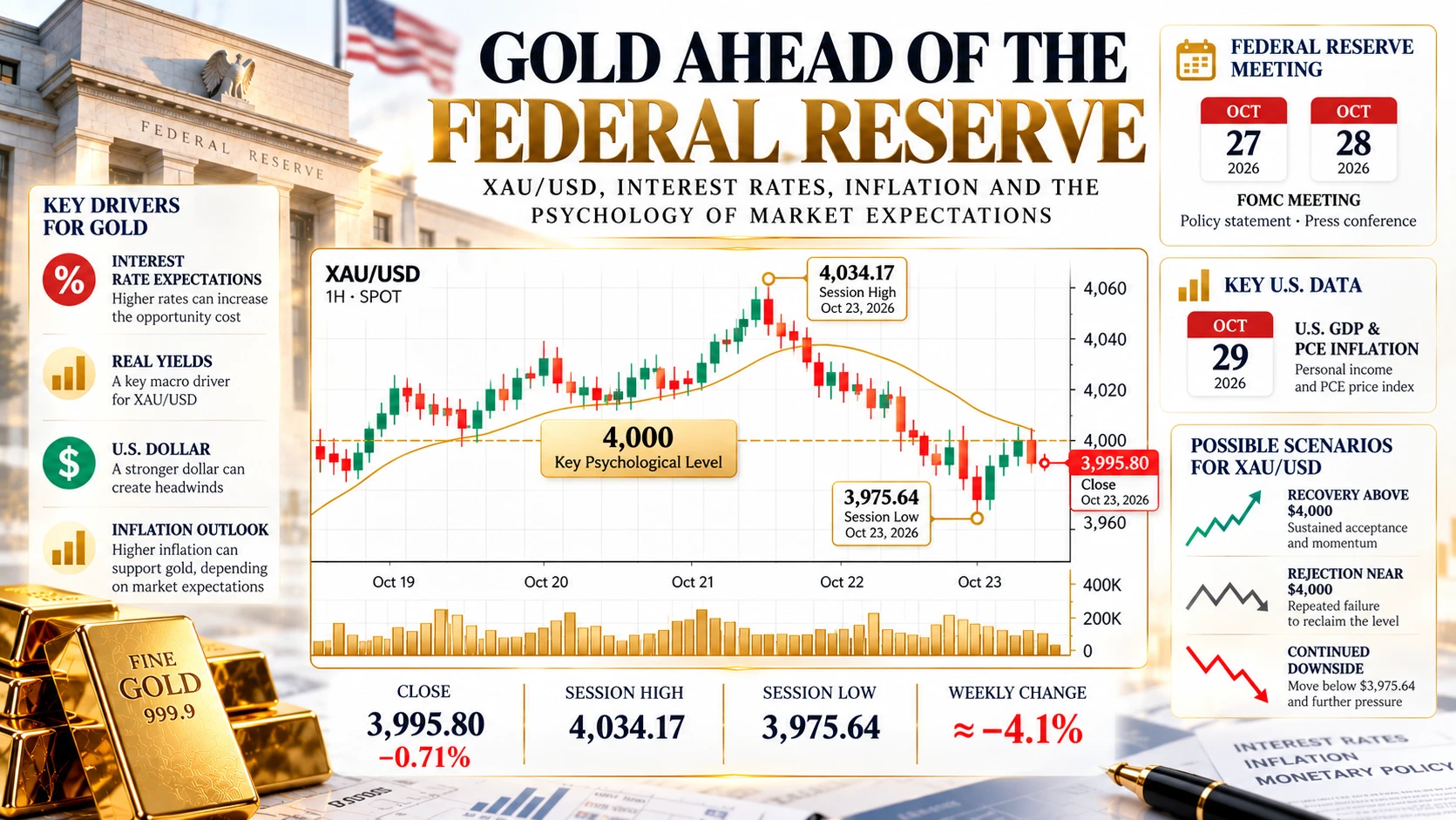
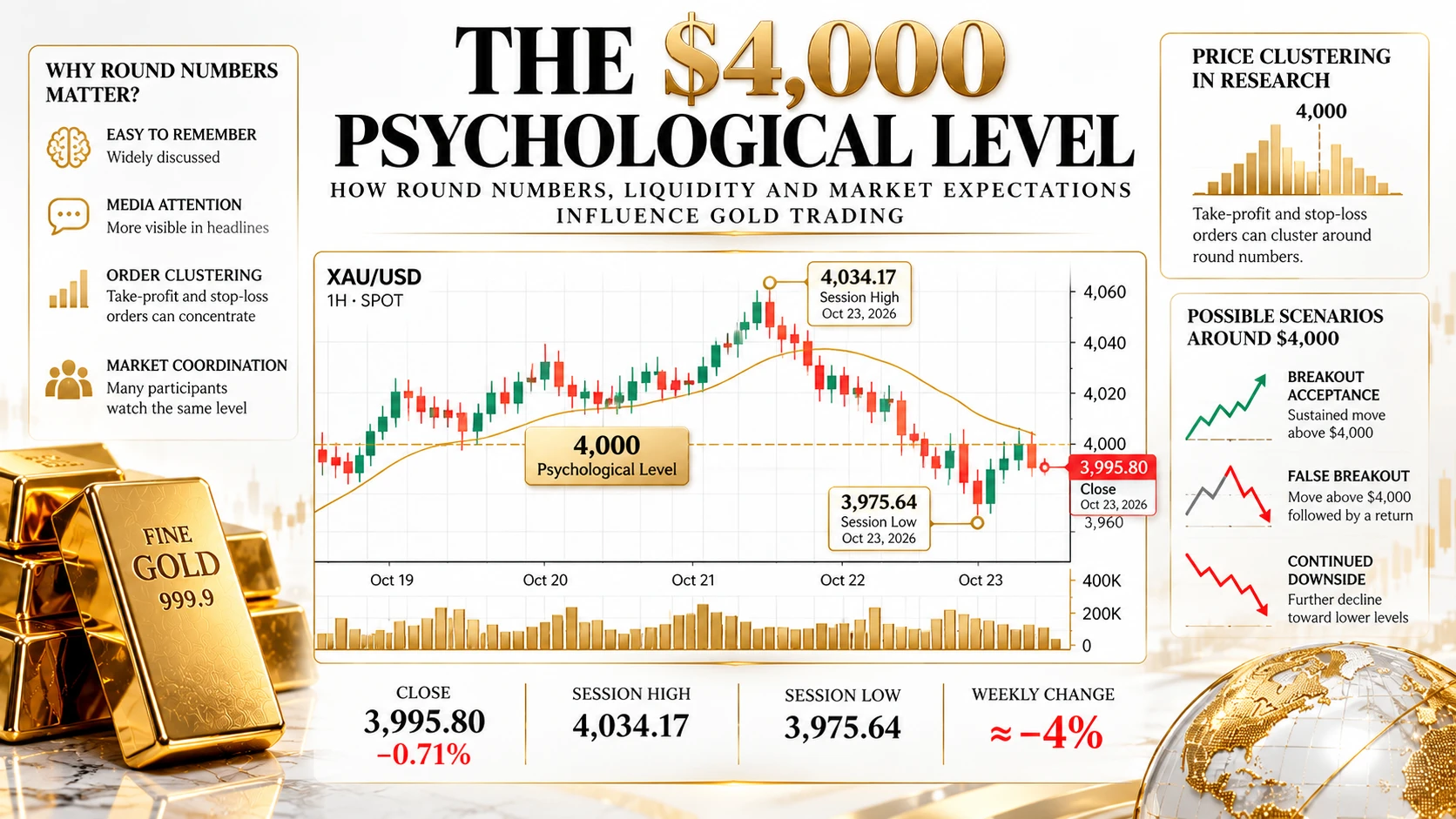
NSI is a proposed research framework, not an independently validated medical or financial prediction system. This article is research and education, not individualized medical or investment advice. Market observations are timestamped historical context, not live prices.
 Market
 Market
 Research