

A deadline transforms the decision task
A market order may appear urgent because a price is moving quickly. Yet urgency has at least two meanings: the opportunity genuinely expires, or a person feels compelled to act even when no rule requires immediate action. These cases should not be conflated. A deadline can reduce the information available before choice, alter attention and lead someone to favor simpler strategies. It can also make a well-practiced decision procedure useful. The question is therefore not whether 'fast decisions are irrational' but which decision mechanisms change as available time contracts and how those changes interact with task complexity [1][2].
Trading discussions often prescribe slowing down every choice. That can be sensible for discretionary high-stakes judgments, yet it is not a universal finding from decision science. Some contexts reward rapid execution of an already chosen plan; other contexts call for refusing a trade until uncertainty is resolved. A research design must separate deliberation time from action latency and record whether the rule itself was determined before or during the deadline. Without this distinction, a fast correct execution and a fast impulsive guess appear identical on a simplistic speed metric.
What time-pressure experiments actually manipulate
Maule, Hockey and Bdzola experimentally varied whether participants faced a decision deadline and examined choices under different task structures [1]. They reported changes in affect and information-processing strategy that depended on features of the choice, rather than a single universal response. This matters for market analogies: a decision with two clearly defined alternatives does not create the same informational challenge as one with many instruments, probabilities and contingent consequences. The study supports investigating interaction effects between deadline and task design. It does not demonstrate that a specified number of seconds predicts any particular XAU/USD outcome.
Payne, Bettman and Johnson used simulations and process tracing to investigate adaptation in choice strategies under effort and accuracy constraints [2]. Their work suggests that people may select simplified procedures to manage restricted resources, sometimes achieving useful performance compared with unsuccessfully attempting a more elaborate analysis. This challenges the moralistic idea that a shortcut is always a cognitive failure. The relevant issue is whether a particular heuristic matches the structure of the decision. A simple protective rule might be appropriate when a long calculation is impossible; a simple price prediction without adequate information may not be.
Stress and urgency can overlap without being identical
Porcelli and Delgado studied financial risk choices under experimentally induced acute stress and observed changes in how choices differed for potential gains and losses [3]. That finding should not be copied onto every deadline as though the manipulations were equivalent. A person can experience time pressure without strong physiological stress, and stress can arise with ample time available. The two conditions may interact, but their separate contribution must be tested. Field observations that traders are hurried during volatile markets cannot resolve the issue because volatility, financial stakes and information arrival may all change at once. A more useful applied distinction is between deadline-induced narrowing of information search and stress-related shifts in the valuation of outcomes. The first concerns which variables are examined; the second concerns how known alternatives are weighted. A prospective study would record both. If a participant ignores the transaction cost under a strict deadline, that resembles a search or attention failure. If the participant sees the cost but accepts a very different risk trade-off, the mechanism may lie elsewhere. Labelling both incidents 'fear' would reduce explanatory precision.
Designing a decision protocol that resists hindsight
A rigorous simulation could vary deadline length while keeping prices, payoff rules and feedback consistent. Participants would have predeclared strategies for a subset of situations and unfamiliar problems for others. Researchers could compare choice quality, reaction time, attention to relevant fields and confidence. They would specify how an objectively better choice is defined, since in many real markets the future outcome is uncertain even after sound reasoning. A process measure such as rule adherence may be more interpretable than realized profit on one random path. Experimenters should also test whether visible countdown clocks have effects beyond the actual time available. Notifications, social pressure and a peer's stated confidence might create artificial urgency. A design with repeated sessions could assess adaptation or habituation, while sufficient separation of conditions would reduce carryover. Crucially, any association with trading behavior must be tested on future, unseen observations with realistic order costs before marketing it as prediction. A model that explains past rushed choices may still fail to anticipate a new one.
Conclusion: speed is a property of the task, not a character test
The primary studies show that constrained time and stress can reshape information search and risk choice, but their effects depend on the structure and stakes of the situation [1][2][3]. Financial work can benefit from distinguishing when execution should be quick from when analysis should be deliberate. This is a question for rule design and careful measurement, not a license to diagnose traders from a countdown clock. NSI remains a proposed interdisciplinary framework; its ideas do not constitute a validated nervous-system score or a gold trading signal.
Scientific bibliography & sources
- [1] Maule AJ, Hockey GRJ, Bdzola L, Effects of time-pressure on decision-making under uncertainty, Acta Psychologica (2000). https://pubmed.ncbi.nlm.nih.gov/10900697/
- [2] Payne JW, Bettman JR, Johnson EJ, Adaptive Strategy Selection in Decision Making, J Exp Psychol (1988). https://scholars.duke.edu/publication/760826
- [3] Porcelli AJ, Delgado MR, Acute Stress Modulates Risk Taking in Financial Decision Making, Psychological Science (2009). https://www.psychologicalscience.org/journals/psychological-science/j.1467-9280.2009.02288.x/
Research note
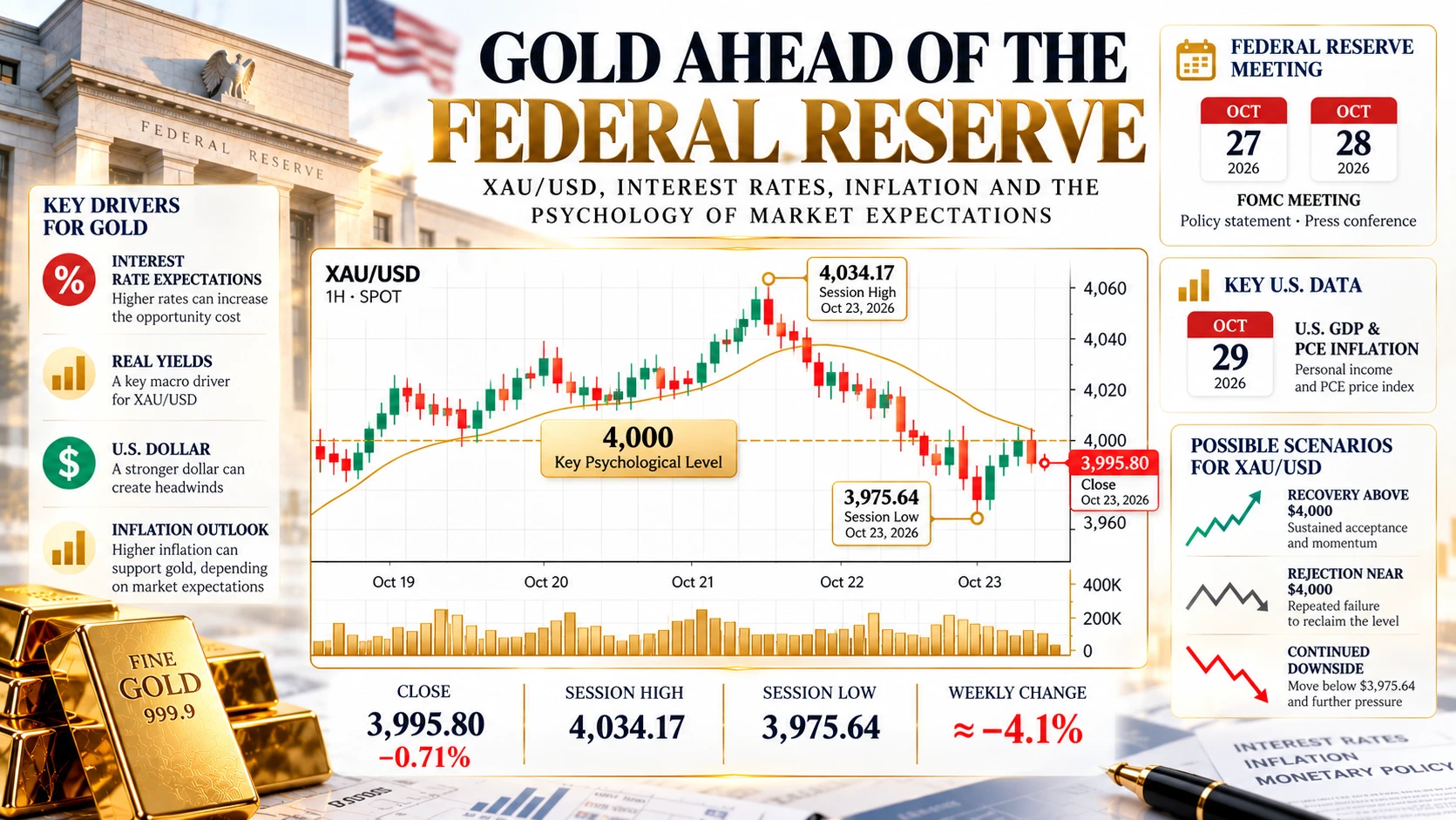
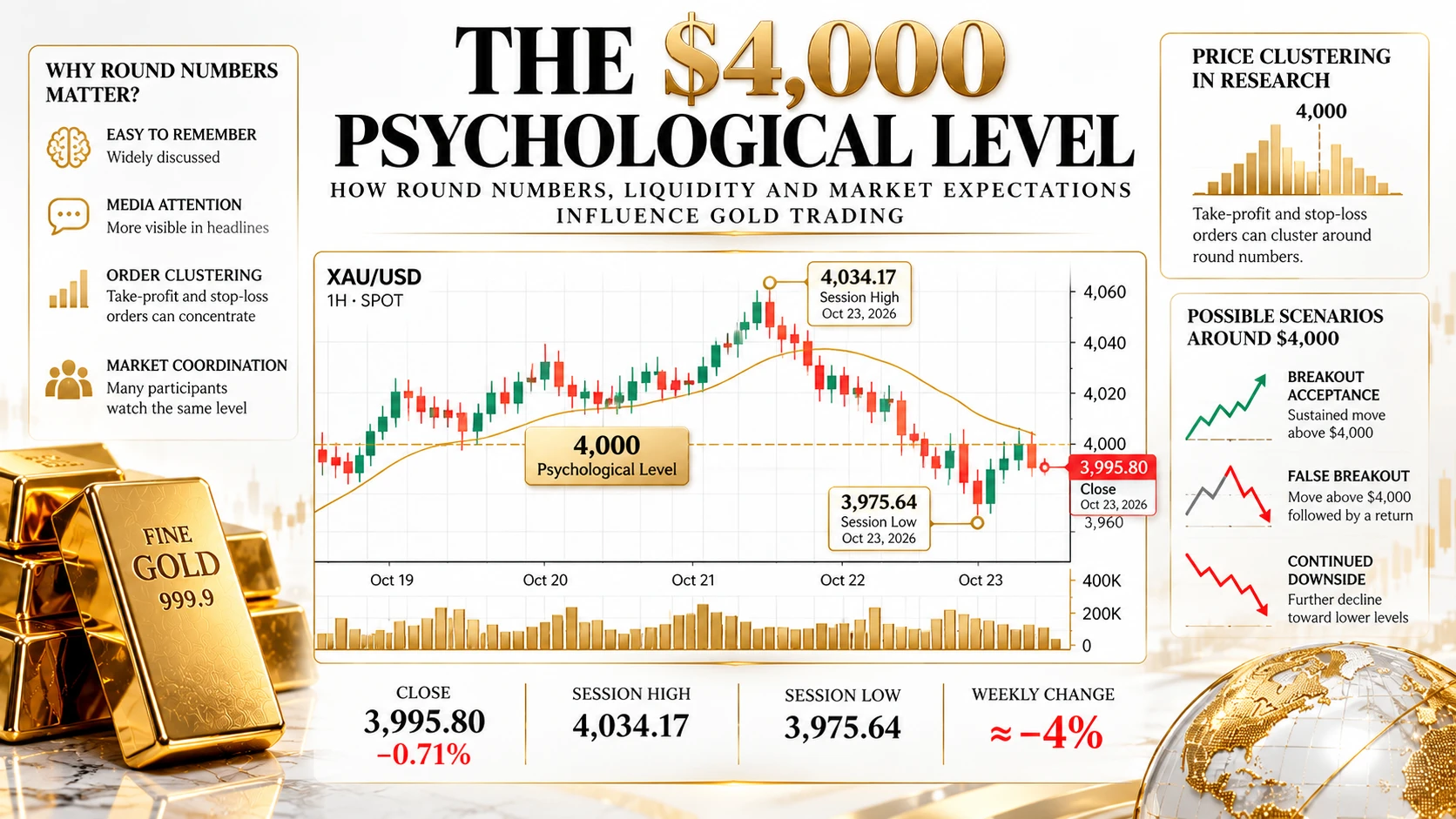
NSI is a proposed research framework, not an independently validated medical or financial prediction system. This article is research and education, not individualized medical or investment advice. Market observations are timestamped historical context, not live prices.
 Market
 Market
 Research