

The specific research question
A trader who steps away from a screen may return feeling clearer. That is not evidence that the original market hypothesis has become more accurate. A pause can alter perceived fatigue or momentary vigilance while leaving the same anchoring, incomplete evidence and poorly specified loss limit intact. The important question is what a break actually changes: subjective discomfort, sustained attention, willingness to reconsider a belief, or the eventual quality of a decision. These outcomes should not be treated as interchangeable. An individual might profit from reduced distraction yet still return to a narrative that was unsupported before the break.
The practical meaning of this finding depends on the unit of analysis. In this case, an observation about microbreaks must not be confused with a direct measurement of decision bias. A researcher should record who supplied the observation, when it was available, which competing explanations were considered and how much evidence would be needed to change the interpretation. Any conclusion drawn after seeing the outcome is vulnerable to hindsight selection. Descriptive context is valuable even when it has no prospective predictive power. The alternative is to overstate a relationship that may change across people, market regimes or measurement protocols.
Mechanism and its boundaries
Sustained monitoring can produce a vigilance decrement: performance on long attention tasks may become less consistent over time. Experiments on brief diversions examine whether a short interruption changes this pattern under specified laboratory conditions [1]. The intervention acts through attention allocation and task engagement; it is not a general repair mechanism for financial beliefs. Other evidence on stress and cognitive flexibility suggests that executive components do not move together [2]. A break might make a person more willing to inspect alternatives, but that behavioral possibility requires measurement rather than assumption. Markets, meanwhile, can change during the interval, making the timing of a decision a separate variable.
A useful diagnostic separates at least three errors. A monitoring error occurs when a person misses a relevant update; a reasoning error occurs when evidence is interpreted incorrectly; a commitment error occurs when a person follows a poor rule despite knowing its weakness. The first might respond to more attentive observation, the second requires an evidence review, and the third may require changes in process or incentives. A short break can be helpful for some people yet fail on the particular error that matters. The temptation to treat every improvement in subjective clarity as better judgment is itself a hypothesis requiring controlled evaluation.
What the primary evidence actually shows
The primary studies cited in NSI's Microbreaks and Attention review examine controlled tasks, not live XAU/USD execution [1][2]. Research on task switching shows that moving among activities has measurable processing costs [3]. Thus a five-minute pause could eliminate some immediate sensory load while introducing reorientation demands when the chart is reopened. There is no scientific basis for promising that a specific duration prevents a loss or improves trade returns. Any transfer from cognitive tasks to trading must be tested prospectively, using decision rules and realistic exposure limits rather than only self-reported calmness.
A critical research program would first reproduce the cited result under its original task definition, then ask what changes in a financial setting. Real-world gold decisions involve uncertain information, execution frictions and incentives absent from many laboratory studies. The outcome cannot be defined only as the trade's eventual profit because a sound process can lose money and an unsound process can occasionally win. Appropriate endpoints include source discrimination, accuracy of judgments, risk-rule compliance and the stability of results across independent samples. This kind of evaluation can reject an attractive story without denying that the underlying cognitive mechanism exists.
A study that could disconfirm the claim
A study could randomize task breaks while holding information access constant and then measure detection of relevant changes, probabilistic reasoning and compliance with a precommitted risk rule. The protocol would record when new news arrived during the break, the person's prior sleep and the difficulty of the decision. The outcome should not be profit alone, which is noisy in the short run. Better prespecified endpoints include detection accuracy, rule violations and consistency across repeated decisions. A second trial could compare simple rest with a structured review of disconfirming evidence. Without that contrast, the contribution of attention and belief revision remains inseparable.
Conclusion: observation before prediction
A break is a change in operating conditions, not a proof that a belief is correct. Readers can explore The Vigilance Decrement and The Hidden Cost of Switching Between Charts, News and Messages for the adjacent research. NSI treats decision preparation as an open scientific question, never as an automatic medical treatment or market-prediction method.
Scientific bibliography & sources
- [1] Helton WS, Russell PN. The effects of brief diversions on vigilance (2011). https://pubmed.ncbi.nlm.nih.gov/21211793/
- [2] Primary experiment on stress and executive control, NSI archive reference. https://pubmed.ncbi.nlm.nih.gov/17576268/
- [3] Rubinstein JS et al. Executive control of cognitive processes in task switching (2001). https://doi.org/10.1037/0096-1523.27.4.763
Research note
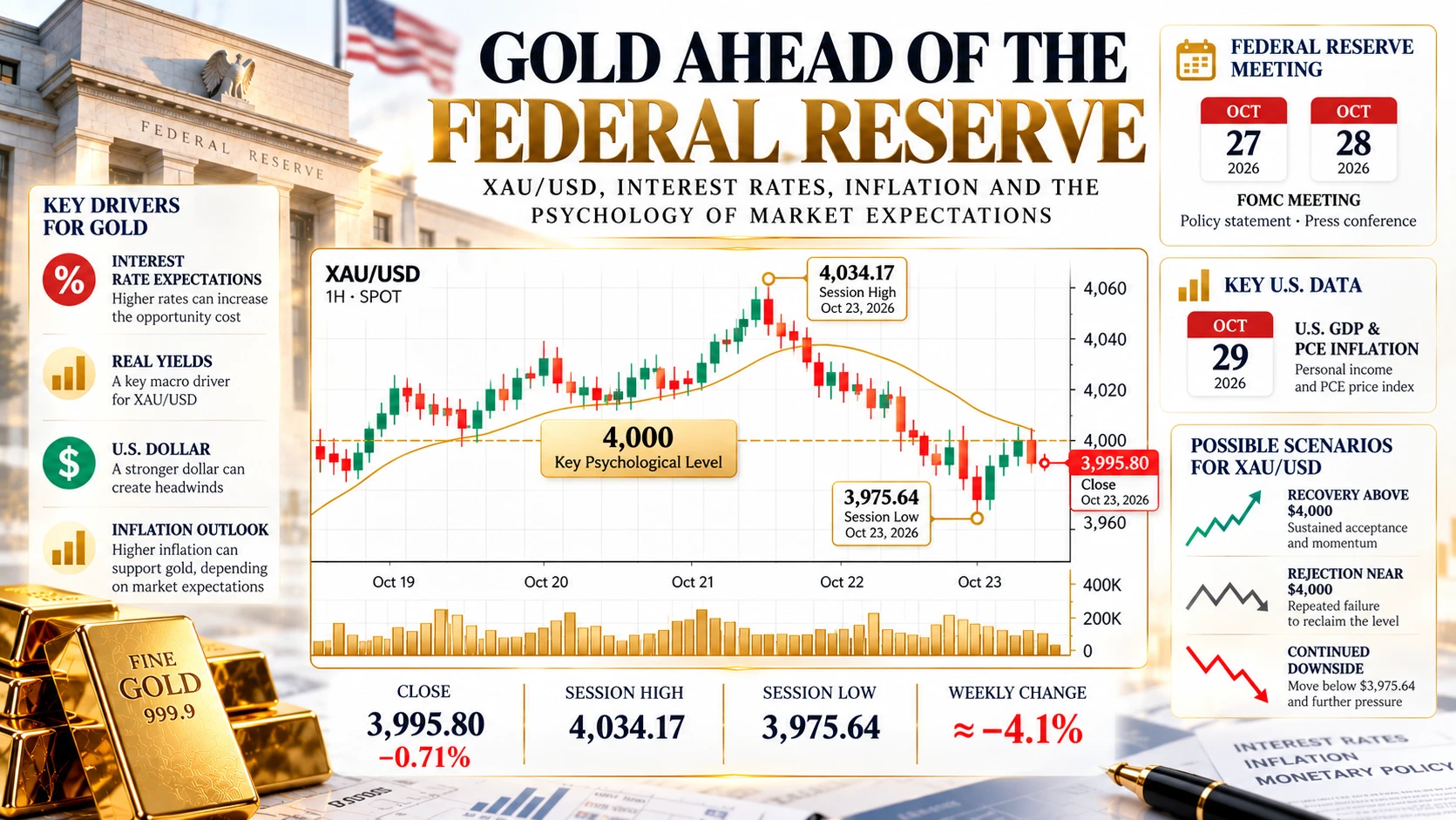
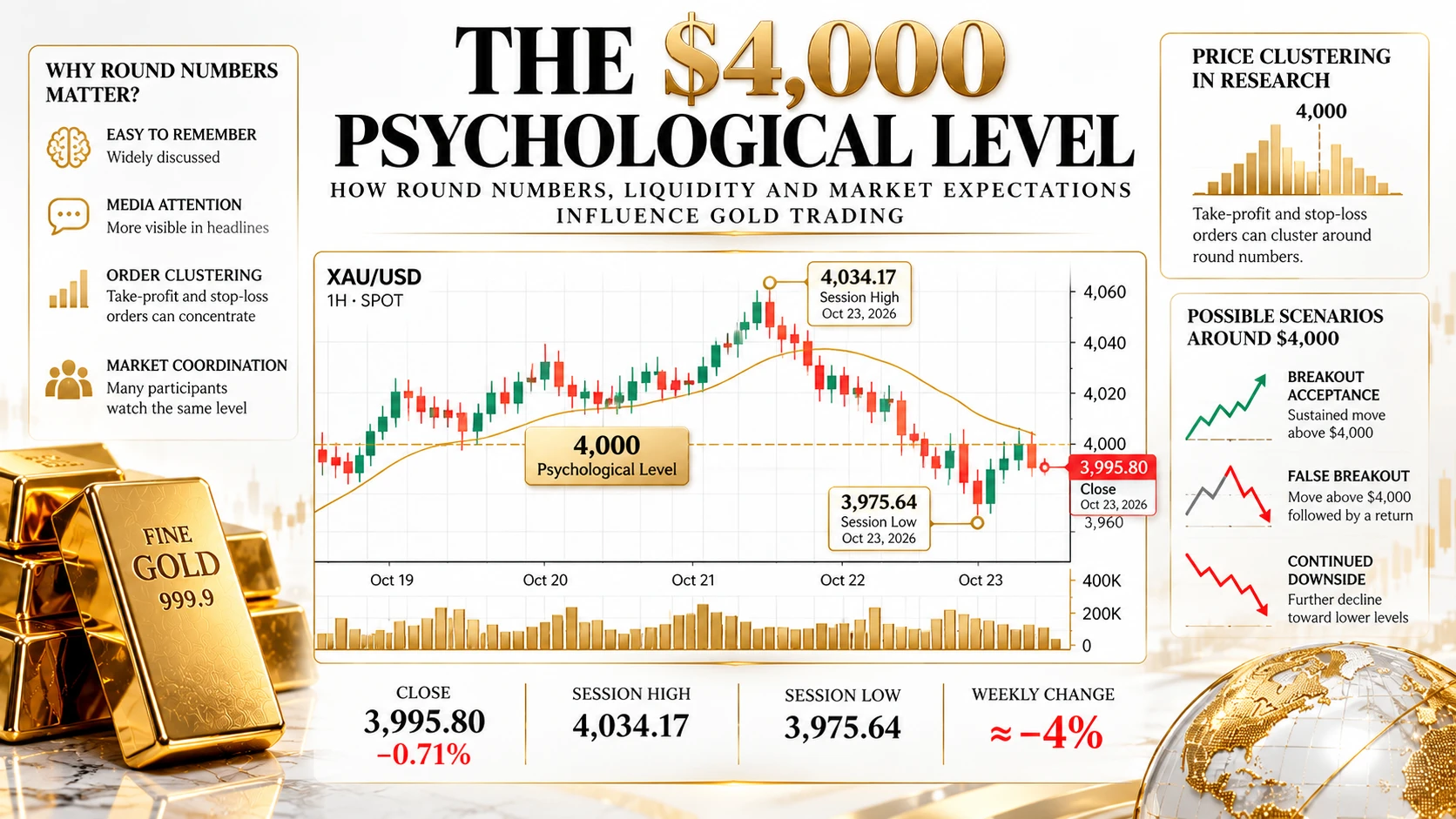
NSI is a proposed research framework, not an independently validated medical or financial prediction system. This article is research and education, not individualized medical or investment advice. Market observations are timestamped historical context, not live prices.
 Market
 Market
 Research