
The question behind the social signal
A gold commentary author is frequently quoted in financial media, so a reader may treat the author's next prediction as more credible than a quieter analyst's estimate. Public visibility, however, is not the same measurement as forecast accuracy. The relevant question is whether advice is weighted according to an accessible record of predictions that were specified in advance and evaluated on comparable horizons. Reputation may convey information about experience, but it can also arise from memorable successes, selective media exposure and the social advantages of confidence. Yaniv and Kleinberger studied how decision makers respond to advice, including the role of their own initial judgements and their impression of an adviser [1]. Such experiments show that incorporating another person's estimate is an active psychological process, not a mechanical extraction of truth. People can discount useful external information because they privilege their own view, yet they can also overvalue advice associated with apparent authority. Financial markets magnify the tension because the outcome arrives later and is influenced by many unobserved forces.
Soll and Larrick examined strategies for revising judgement using other people's opinions [2]. A striking practical distinction is between combining estimates and substituting one estimate for another. If the external forecast provides independent information, integration may be helpful; if it merely repeats the reader's own assumptions or is driven by the same publicly available headline, treating it as an additional independent signal can create false certainty. A track record must therefore include evidence about correlation and the information environment, not just the percentage of correct directional calls.
What experiments and information networks show
A credible record requires decisions about measurement before the forecast result is known. What was the asset? Which market closing price or benchmark defined success? When did the forecast become publicly available? Was it a point estimate, a range or a probability? What outcome counted as an error? A prediction that gold will 'be volatile soon' cannot be scored in the same way as a clearly bounded probability of a defined event. Without these definitions, media reputation can be manufactured by endlessly reinterpretive commentary. Tetlock's classic work on accountability and complexity of thought points to another consideration: the conditions under which an opinion is expressed can shape reasoning [3]. A forecaster addressing a demanding audience may behave differently from someone speaking to supporters who reward confidence. Public accountability alone is not proof of quality, and shame-based scoring may encourage vague language or strategic hedging. A responsible record should invite explicit uncertainty and preserve the original statement, including forecasts that were later revised or withdrawn.
One proposed study would show participants the same gold market facts together with forecasts attributed to either a recognizable expert, an anonymous contributor or a contributor with a verified historical score. The experiment should vary labels while holding the forecast content fixed, then measure how participants revise their own probabilities. A second condition could reveal that the advisers drew on overlapping sources. This would distinguish response to social status from response to demonstrable predictive performance and from response to informational independence. Evaluation should not reward only winners. A probabilistic forecaster who assigns sixty percent to an event that occurs is not automatically 'more correct' than someone assigning eighty percent. Over repeated events, scoring rules such as the Brier score can assess calibration and discrimination, but only when probabilities and outcomes are rigorously defined. Small samples should be reported with uncertainty because a short run of favourable calls may be chance. The publication should show complete sequences, including unremarkable and wrong forecasts.
Operational tests, boundaries and conclusion
A Gold Terminal context module could display forecast timestamp, exact question, horizon, evidence link and eventual outcome, where publication rights permit. It should not attach a prestige badge to unverified past predictions or turn a commentator's follower count into a scientific reliability score. The challenge is to make disagreement inspectable rather than to rank people as inherently better thinkers. The same source might perform well on macroeconomics and poorly on intraday microstructure; domain boundaries must remain visible. Why an Influential Gold Forecaster Can Anchor a Crowd explores initial anchoring. Listening Without Surrendering Judgment investigates how external opinions enter individual decisions. A Forecast Without Probability Cannot Be Calibrated describes a necessary measurement condition. These connections explain why reputational authority, advice weighting and recorded accuracy are related questions, but they are not interchangeable concepts and should be evaluated with different evidence.
The conclusion is that a credible gold forecast is a reproducible claim with a date, horizon and testable outcome. Reputation may guide attention but cannot replace that record. NSI's contribution would be to study how users respond to such records in controlled settings, not to issue a clinically validated assessment of advisers or to promise that a famous market voice predicts XAU/USD.
Scientific bibliography & sources
- Yaniv I, Kleinberger E. Advice taking in decision making: egocentric discounting and reputation formation. OBHDP (2000). https://pubmed.ncbi.nlm.nih.gov/11056071/
- Soll JB, Larrick RP. Strategies for revising judgment: how and how well people use others' opinions. JEP:LMC (2009). https://pubmed.ncbi.nlm.nih.gov/19379049/
- Tetlock PE. Accountability and complexity of thought. Journal of Personality and Social Psychology (1983). https://doi.org/10.1037/0022-3514.45.1.74
Research note
NSI is a proposed research framework, not an independently validated medical or financial prediction system. This article is research and education, not individualized medical or investment advice. Market observations are timestamped historical context, not live prices.
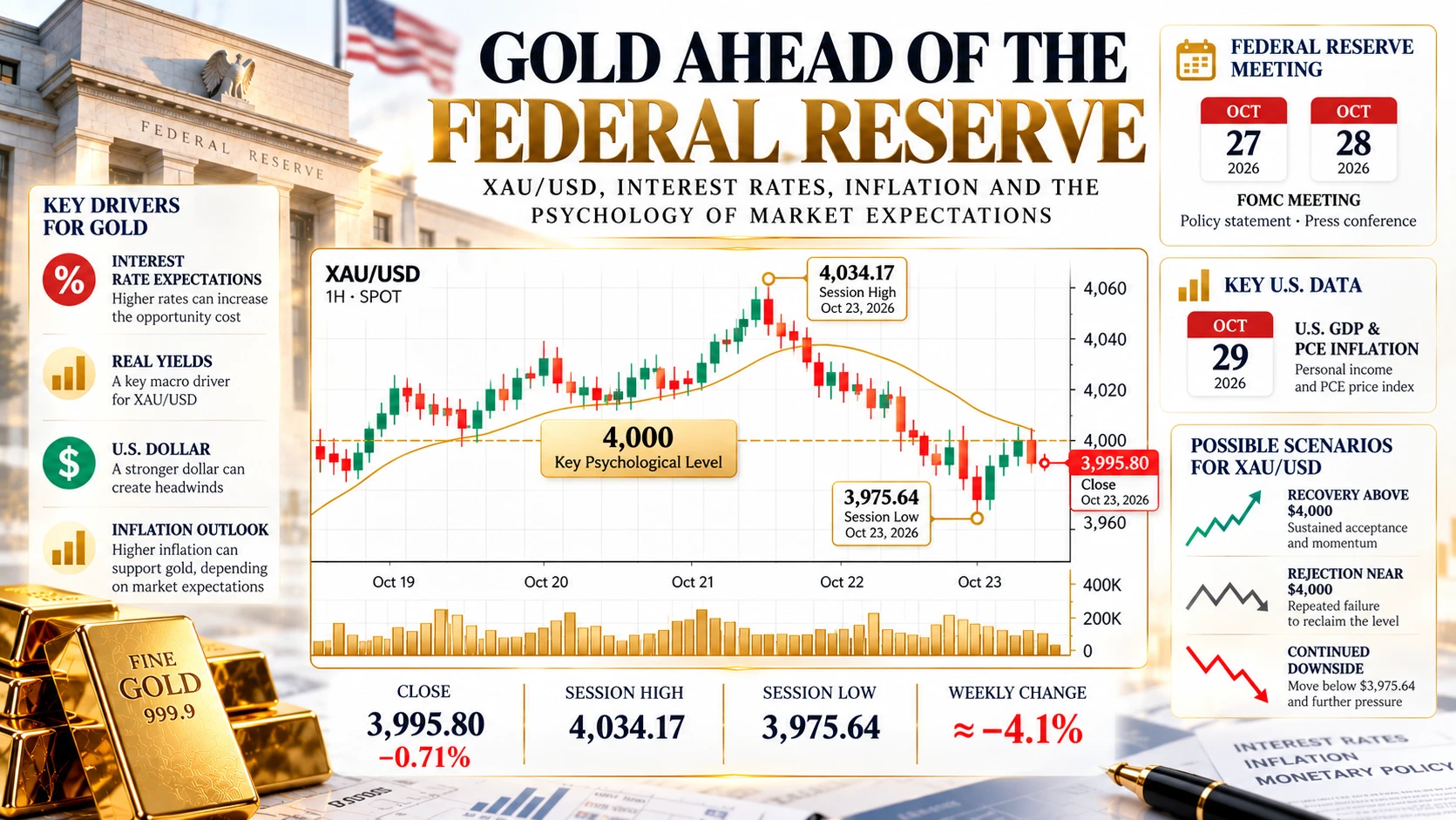 Market
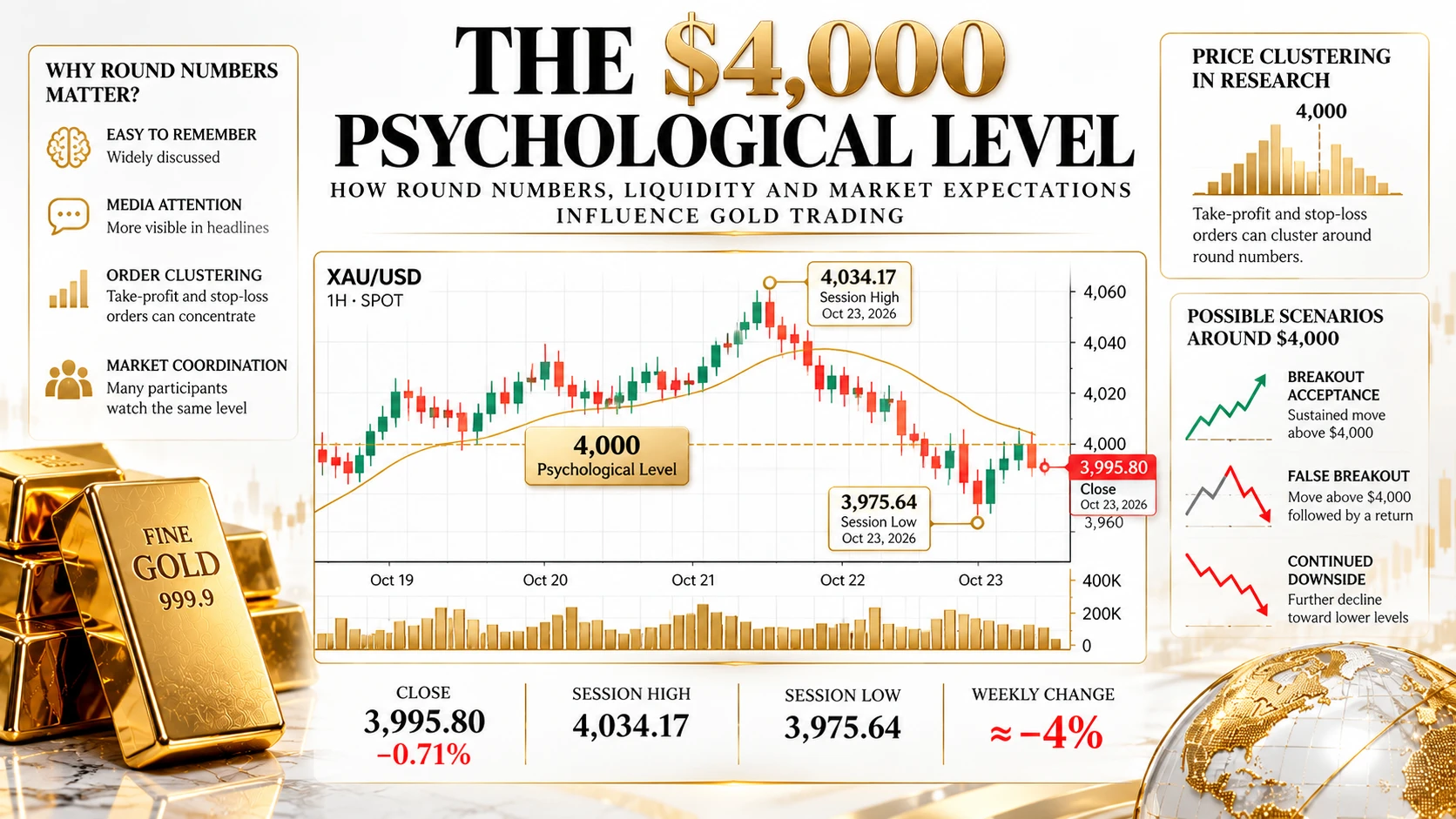 Market
 Research