

The question behind the social signal
An unconfirmed claim about central-bank gold activity appears on a trading feed. The story spreads rapidly, market commentators discuss it, and a correction arrives later. A user may remember the original explanation for a price move even after acknowledging the correction. This creates an editorial and behavioral question: how should a system handle the lifetime of a claim when its factual status changes? It is not enough to label the corrected item accurately if the first version remains embedded in the user's mental explanation. Johnson and Seifert's research on the continued-influence effect examined how discredited information can persist in later inferences [1]. This does not prove that a particular gold rumor caused a price movement, nor that all corrections are ineffective. It does show why memory may preserve a causal narrative longer than the original claim's factual validity. A market interface that quietly edits its old headline risks leaving the reader with no visible record of what changed and when.
Ecker, Lewandowsky and Tang experimentally studied warnings about misinformation and found that explicit warnings can reduce, but do not necessarily eliminate, continued influence [2]. The finding matters for presentation. A prominent correction is better understood as an attempt to update the user's evidence state, not as an automatic eraser of prior belief. A careful news system can show the corrected claim alongside the original timestamp and reason for the change rather than treating the first version as if it never existed.
What experiments and information networks show
Nyhan and Reifler examined the persistence of political misperceptions after corrections [3]. Their context differs from financial trading, so it would be misleading to transplant every result into a claim about gold investors. The wider lesson is that the audience's prior beliefs and interpretation of authority can shape how correction messages are processed. A reader who already distrusts the correcting institution may react differently from one who has no prior position. Such mechanisms require direct tests in the financial setting. For an evidence-focused feed, separate four timestamps: when the underlying event allegedly happened, when the first report appeared, when the system ingested it, and when a correction was published. These timestamps are not equivalent. A backtest that stamps corrected information at the original publication time would introduce hindsight into the historical record. The terminal should retain a version history and a correction reason while clearly presenting the latest verified state to users.
Source lineage is equally important. If several posts repeat the same erroneous origin, the system should not count each as independent corroboration. A correction from the original primary institution may carry different evidentiary weight from a casual repost, but credibility still requires document identity and contextual accuracy. The interface should make the relationship visible: original allegation, source, verification attempts, correction and any remaining uncertainty. That does not require speculating about every reader's psychology. An experimental study could present participants with a news item, then a correction in one of several interfaces: an unobtrusive note, a linked version history or a directly juxtaposed correction and original. Later, ask participants to recall the factual status and explain a hypothetical market scenario. The pre-registered outcomes could include accurate recall, recognition of unresolved claims and unwarranted confidence. It would be inappropriate to define success solely as whether their simulated gold trades happened to make money.
Operational tests, boundaries and conclusion
Practical safeguards must also protect against overcorrection. Institutions may release ambiguous preliminary statements, and subsequent details can refine a claim without proving it entirely false. The system needs states such as unverified, partially supported, corrected and confirmed, each supported by source links and timestamps. A binary true-false label applied prematurely can itself misinform. Readers should be able to distinguish a factual reversal from an evolving situation where new data became available. Why a Corrected Market Rumor Can Keep Influencing Decisions provides the cognitive background; Attention Is Not Information examines how repetition affects salience; Why a Repeated Gold Headline Can Feel Like Fresh Confirmation studies the apparent novelty of duplicated narratives. The present question turns those observations into a proposed publication and versioning protocol for financial research without claiming that the protocol has already been experimentally validated.
The conclusion is operationally simple but psychologically demanding: publish corrections as first-class evidence with retained history, not invisible edits. NSI can help investigate whether different correction interfaces improve understanding and reduce reliance on discredited explanations. Neither a cognitive experiment nor an editorial label can predict XAU/USD, but both can make the information environment more auditable.
Scientific bibliography & sources
- Johnson HM, Seifert CM. Sources of the continued influence effect. JEP:LMC (1994). https://doi.org/10.1037/0278-7393.20.6.1420
- Ecker UKH, Lewandowsky S, Tang DTW. Explicit warnings reduce but do not eliminate continued influence of misinformation. Memory & Cognition (2010). https://pubmed.ncbi.nlm.nih.gov/21156872/
- Nyhan B, Reifler J. When corrections fail: persistence of political misperceptions. Political Behavior (2010). https://doi.org/10.1007/s11109-010-9112-2
Research note
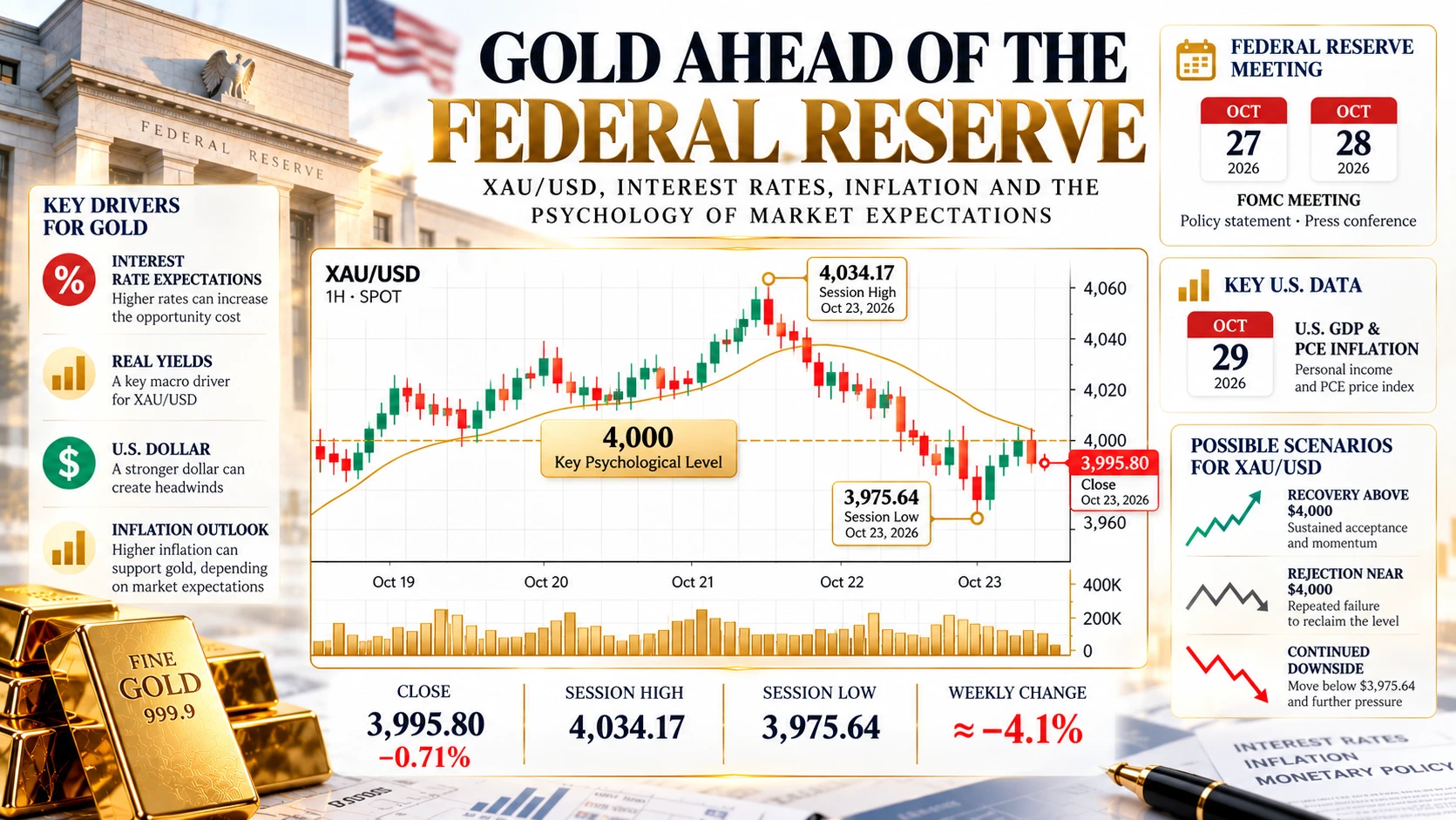
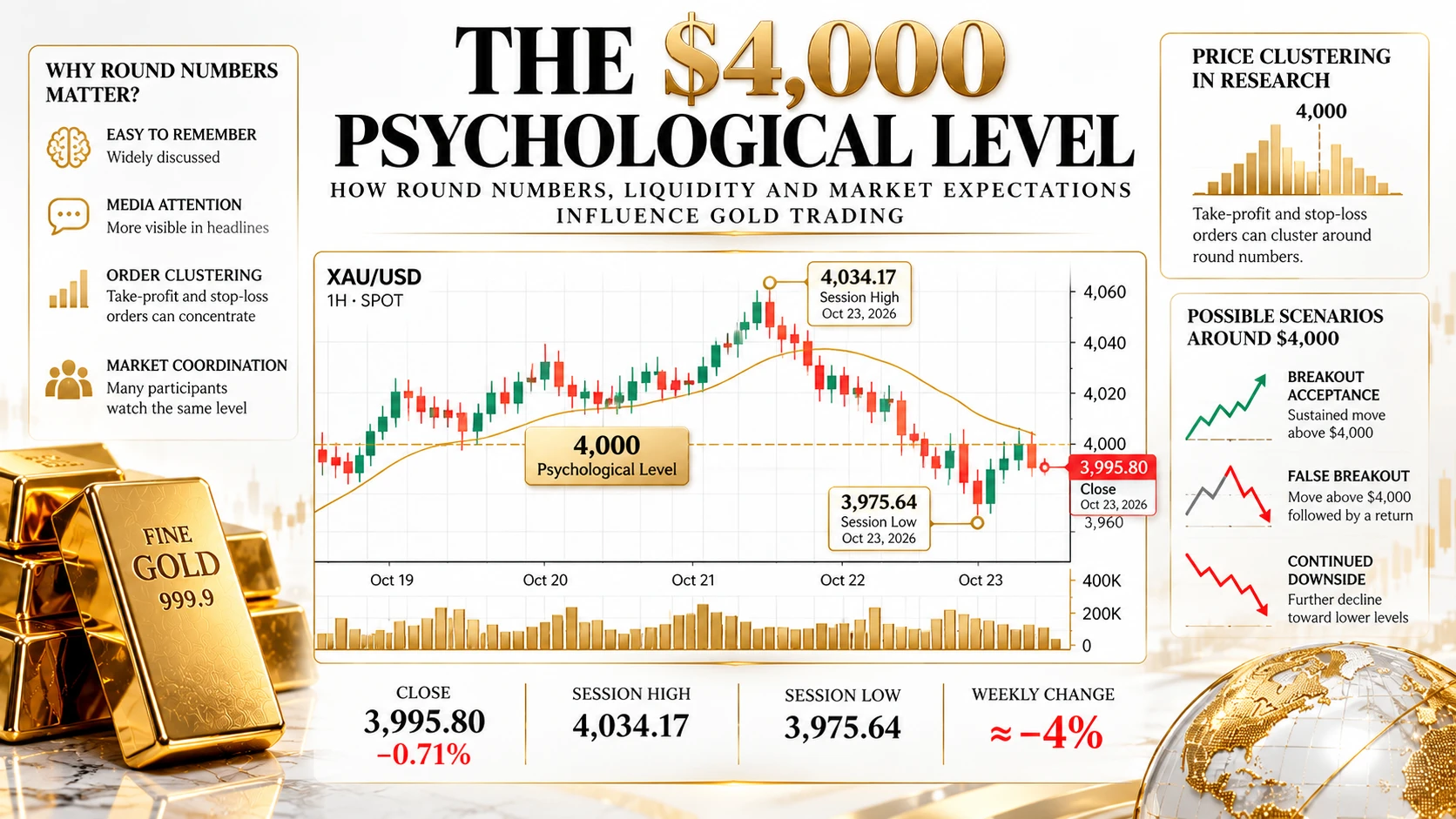
NSI is a proposed research framework, not an independently validated medical or financial prediction system. This article is research and education, not individualized medical or investment advice. Market observations are timestamped historical context, not live prices.
 Market
 Market
 Research