

An impressive hit rate is an incomplete performance claim
Imagine a gold commentary channel posting one hundred confident predictions. It advertises that most were correct but does not specify which questions were eligible, how the forecasts were timestamped or how ambiguous outcomes were treated. A count of wins can conceal a system in which failed forecasts were deleted, unchanged statements were counted repeatedly or ordinary price fluctuations were treated as successes. The research question is not whether one commentator sounded persuasive. It is whether a community can define a forecasting task so that every participant is measured by the same resolution and scoring rules.
A forecast is evaluable only when the outcome can be adjudicated independently. Gold will rise is not enough: relative to which benchmark, starting value and deadline? A system should identify the reference market, timestamp, possible data interruption and definition of success before collecting estimates. Probabilistic outputs make uncertainty explicit. An analyst who assigns a sixty-percent probability to an event is not claiming it must happen; the long-run calibration question is how events assigned similar probabilities resolve over many cases. A Forecast Without Probability Cannot Be Calibrated sets out why vague conviction labels fail this test.
Brier introduced a verification method for probability forecasts in 1950 [1]. For a binary event, a squared-error probability score penalizes the gap between the stated probability and the observed outcome. The calculation rewards honest probabilistic calibration over repeated questions, but it does not reveal why somebody was accurate. A forecast could be correct because of skill, access to public information, favorable event selection or chance. Researchers must examine the portfolio of questions and how forecasters were invited to participate before treating any result as a durable individual attribute. Proper scoring should not be confused with real-money trading profit. Even a well-calibrated direction forecast can be economically useless if spreads, financing, leverage and the size of the move are ignored. A study that evaluates probabilities on daily close outcomes is a different enterprise from a backtest that assumes executable entry and exit fills. A responsible platform should publish these as distinct categories and never convert a forecasting rank into a guaranteed return statement. The question here is intellectual accountability rather than investment solicitation.
What evidence on forecasting communities actually supports
Mellers and colleagues documented a forecasting-tournament approach to identifying and cultivating high-performing probabilistic forecasters [2]. The study's domain was geopolitical forecasting, not short-horizon XAU/USD. It demonstrates the value of repeated resolvable questions, feedback and disciplined aggregation, but does not establish that the same participants could forecast gold prices profitably. Conditions in financial markets differ: prices respond to information, there is continuous trading, and well-known signals may be incorporated quickly. The transfer therefore requires a new independent test rather than a marketing analogy. Atanasov and colleagues experimentally compared prediction markets and prediction polls in a geopolitical tournament [3]. Results depended in part on the aggregation approach, temporal weighting and recalibration. This matters because a community average is not automatically the strongest baseline. Researchers should compare unweighted means, simple historical baselines and carefully specified calibrated aggregates under common scoring. Adding model complexity after reviewing the same sample creates selection bias. A held-out evaluation set must remain untouched until design choices are frozen.
A valid public record includes every resolved question, even the uneventful ones. Selectively highlighting dramatic forecast wins would distort the estimated hit rate. Events must be registered before the outcome, and cancellations should follow a policy adopted before performance is known. Researchers should report the number of forecasts, median horizon, nonresponse, unresolved questions, confidence intervals and evidence that the benchmark was actually available at the stated time. Such transparency makes a weak result interpretable instead of allowing a persuasive narrative to replace measurement. Another issue is whether some forecasters choose easier questions. A participant making only forecasts on unusually predictable events should not be compared casually with somebody forecasting difficult macro announcements. Comparing equal questions, using difficulty-adjusted metrics cautiously and reporting calibration separately from discrimination can help. Should You Trust a Gold Forecaster's Reputation or Their Recorded Accuracy? discusses the difference between audience status and observed track record. A scoring system should reduce the importance of prestige without pretending that every measure of skill is immune to selection effects.
How an NSI research register could be audited
NSI.GOLD could publish a versioned event registry with the original question, forecast deadline, resolution rule, all initial probabilities and every revision with timestamps. Private submissions would remain protected while aggregate performance reports could be public. The registry should identify whether individuals had access to each other's estimates. Otherwise forecasts that look independent might be copied. The architecture should make later deletions visible to authorized auditors and prevent resolved questions from being silently rewritten. An explainable record is more useful than a glossy leaderboard. A research page might plot forecast calibration by probability band, show uncertainty intervals and compare forecasts against simple no-skill baselines. It should label the sample period and explain that calibration in one market regime may not persist. If forecast errors cluster around scheduled central-bank announcements or illiquid sessions, that should be reported as a descriptive result before any causal explanation is offered. Researchers can test hypotheses prospectively, but a chart that appears convincing after the fact must not be presented as validation.
The conclusion is that a proper scoring rule is necessary for accountable probability forecasting, but it is not sufficient for financial prediction or profitable execution. Question selection, access to information, event definition, data leakage and sample size remain decisive. A transparent community can publish both successful and unsuccessful periods without promising a market edge. NSI is a proposed interdisciplinary research framework, not a clinically validated or financially validated signal system. Its legitimate contribution is to replace retrospective certainty with a permanent, falsifiable record of what was predicted, when, and with how much uncertainty.
Scientific bibliography & sources
- [1] Brier GW. Verification of forecasts expressed in terms of probability. Monthly Weather Review (1950). https://journals.ametsoc.org/doi/10.1175/1520-0493%281950%29078%3C0001%3AVOFEIT%3E2.0.CO%3B2
- [2] Mellers B et al. Identifying and cultivating superforecasters as a method of improving probabilistic predictions. Perspectives on Psychological Science (2015). https://www.psychologicalscience.org/journals/perspectives/1745691615577794/
- [3] Atanasov P et al. Distilling the wisdom of crowds: Prediction markets vs. prediction polls. Management Science (2017). https://doi.org/10.1287/mnsc.2015.2374
Research note
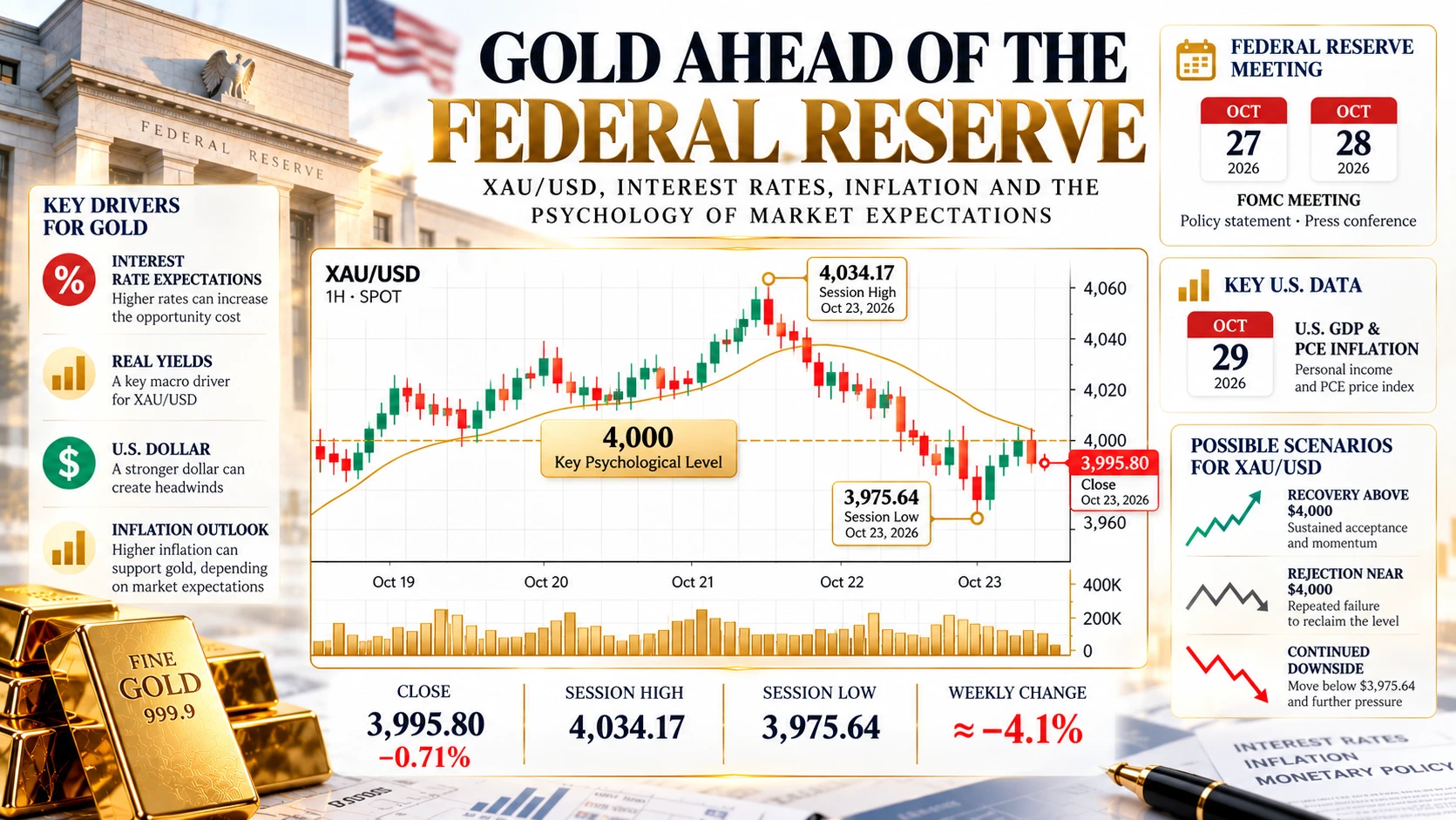
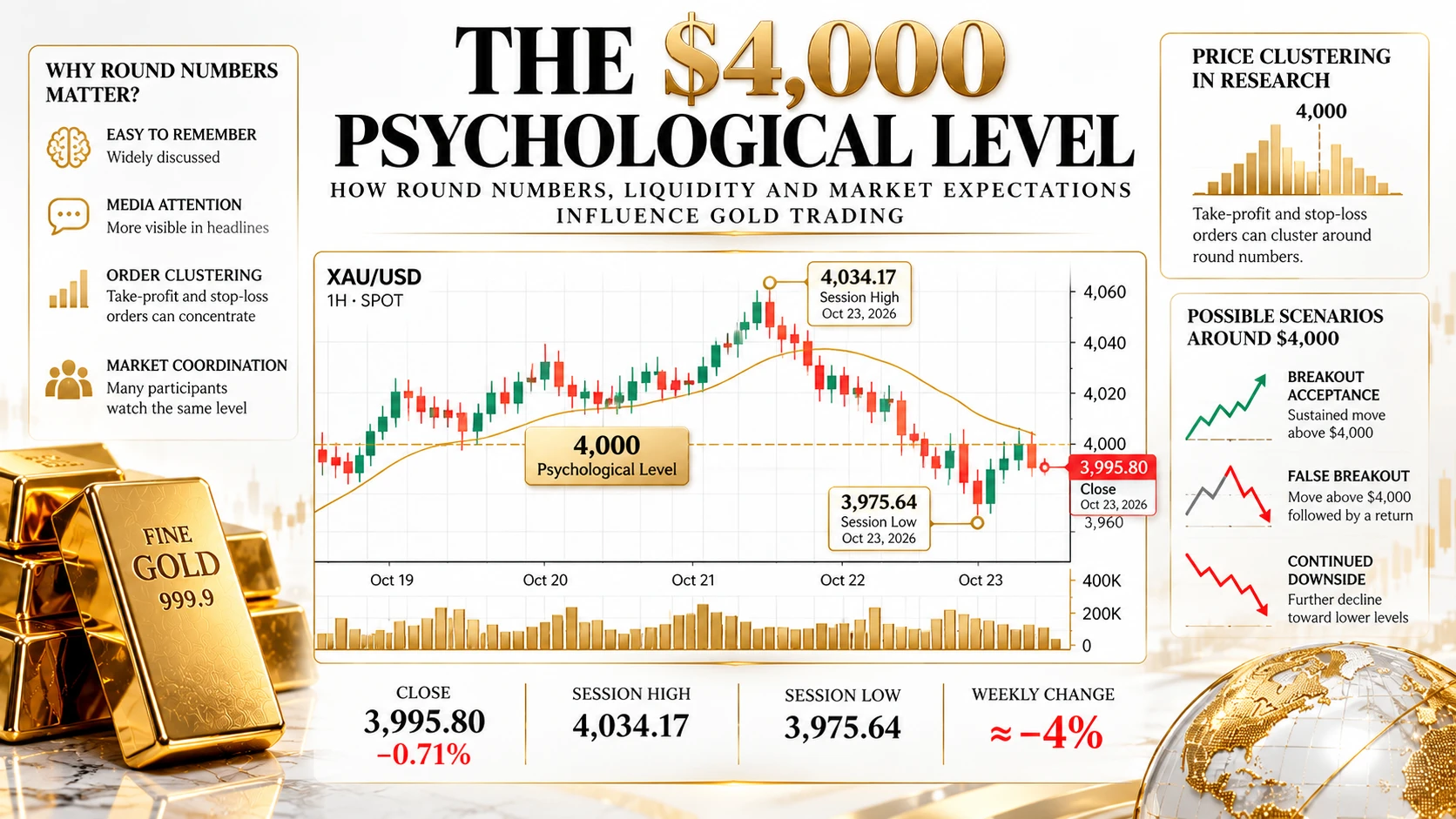
NSI is a proposed research framework, not an independently validated medical or financial prediction system. This article is research and education, not individualized medical or investment advice. Market observations are timestamped historical context, not live prices.
 Market
 Market
 Research