
A viral narrative and a verified price fact are different objects
Suppose a claim about gold appears first in a specialist discussion, then in a private group, then on multiple social channels. The audience may experience the third encounter as confirmation, even though all three appearances may trace back to one untested sentence. A research question follows: does the architecture of the audience network change how much attention and perceived credibility a market story receives? The answer should not be sought by counting reposts alone. A repost records a transmission event, whereas independent supporting evidence requires a separate observation, measurement or defensible analytical argument. These are different units and must be counted separately.
Experimental social-network research provides a relevant mechanism, but not a direct forecast for XAU/USD. In an online network experiment, Centola tested how network topology affected behavioral adoption and found that clustered reinforcement could facilitate the spread of a behavior that depends on exposure through multiple contacts [1]. This is useful because accepting an unfamiliar market narrative may also involve repeated social reassurance. The similarity remains an analogy rather than proof: joining an experimental health network and making a leveraged gold trade differ in incentives, downside risk, market access and institutional constraints.
A second experiment involving online political mobilization found that the social framing of a message and the relationships through which it traveled influenced certain behaviors [2]. Its scale and design make it powerful evidence that network ties can matter, not evidence that a close friend's gold forecast is more accurate. When interpreting markets, a researcher should separate the audience's willingness to act from the validity of the information prompting action. That separation is essential to understanding when the crowd agrees, independent information may disappear, especially when individuals share the same upstream source.
What the data should preserve about a story's path
A serious analysis begins with provenance. Each observation should record the earliest recoverable publication time, its URL or archival identifier, the author or institution, the evidence cited, and whether the next source added an independently verifiable fact. An article repeating another publisher's estimate counts as another distribution point, not another independent estimate. Likewise, a screen capture whose original timestamp cannot be established should not acquire stronger evidentiary status merely because it is widely distributed. If the origin cannot be reconstructed, mark source independence as unknown rather than silently awarding a confidence score. Network structure also raises a sampling problem. A highly active cluster may dominate visible discussion while the broader population remains silent or holds different beliefs. An analyst who samples only the fastest-moving discussion communities will estimate activity within those communities, not population-wide sentiment. This matters for interpreting gold positioning: exchange data, reported investment flows, physical market demand, and social messages measure different phenomena. One cannot substitute the volume of online commentary for exchange-level orders or settled purchases, even when the commentary coincides with a significant price move.
Experimental work on social influence has shown that exposing people to others' estimates can alter the dispersion and quality of collective estimates [3]. Combined with network experiments, this suggests a practical research design: collect independent initial beliefs before showing any social feed, then expose randomized groups to different network arrangements, and measure revisions. Predefine whether the outcome is belief change, source recall, perceived reliability, or willingness to trade. Those outcomes cannot be swapped after results are observed. Any later comparison with gold returns would require its own independent, time-stamped market dataset.
What a responsible NSI network observatory would report
An NSI observatory should therefore display at least three columns: what claim circulated, how it circulated, and what evidence was actually added. A claim could show rapid audience growth while the independent-evidence count remains unchanged. Such a dashboard would be useful precisely because it resists the temptation to transform social momentum into a buy or sell recommendation. A second field could identify whether the original market variable was observed directly or inferred from a headline. It must remain possible for a widely shared explanation to be wrong, incomplete, or true for reasons unrelated to its popularity.
The practical reader can ask a short sequence of questions before allowing network activity to influence interpretation. Is there an identifiable first source? Has anyone introduced a distinct dataset? Are copied conclusions being counted as separate forecasts? Would the assessment change if the author names and follower counts were hidden? These questions complement research on why forecasts become more similar after traders see each other's estimates and on the illusion created when one popular chart is mistaken for many independent signals. They do not make a person immune to influence, but they make the provenance of an inference easier to audit.
The conclusion is deliberately narrow. Network experiments make it credible that the route of information can change engagement and behavior [1][2], and estimation experiments show that social exposure can affect collective judgments [3]. None validates a numerical gold-price prediction or establishes a causal effect of an online network on a specific XAU/USD candle. NSI is a proposed interdisciplinary research framework. Its most defensible contribution here is to distinguish a story's social reach from the independent evidence supporting it, so the next market interpretation begins with a better question rather than a louder consensus.
Scientific bibliography & sources
- [1] Centola D. The spread of behavior in an online social network experiment. Science (2010). https://pubmed.ncbi.nlm.nih.gov/20813952/
- [2] Bond RM et al. A 61-million-person experiment in social influence and political mobilization. Nature (2012). https://www.nature.com/articles/nature11421
- [3] Lorenz J et al. How social influence can undermine the wisdom of crowd effect. PNAS (2011). https://pmc.ncbi.nlm.nih.gov/articles/PMC3107299/
Research note
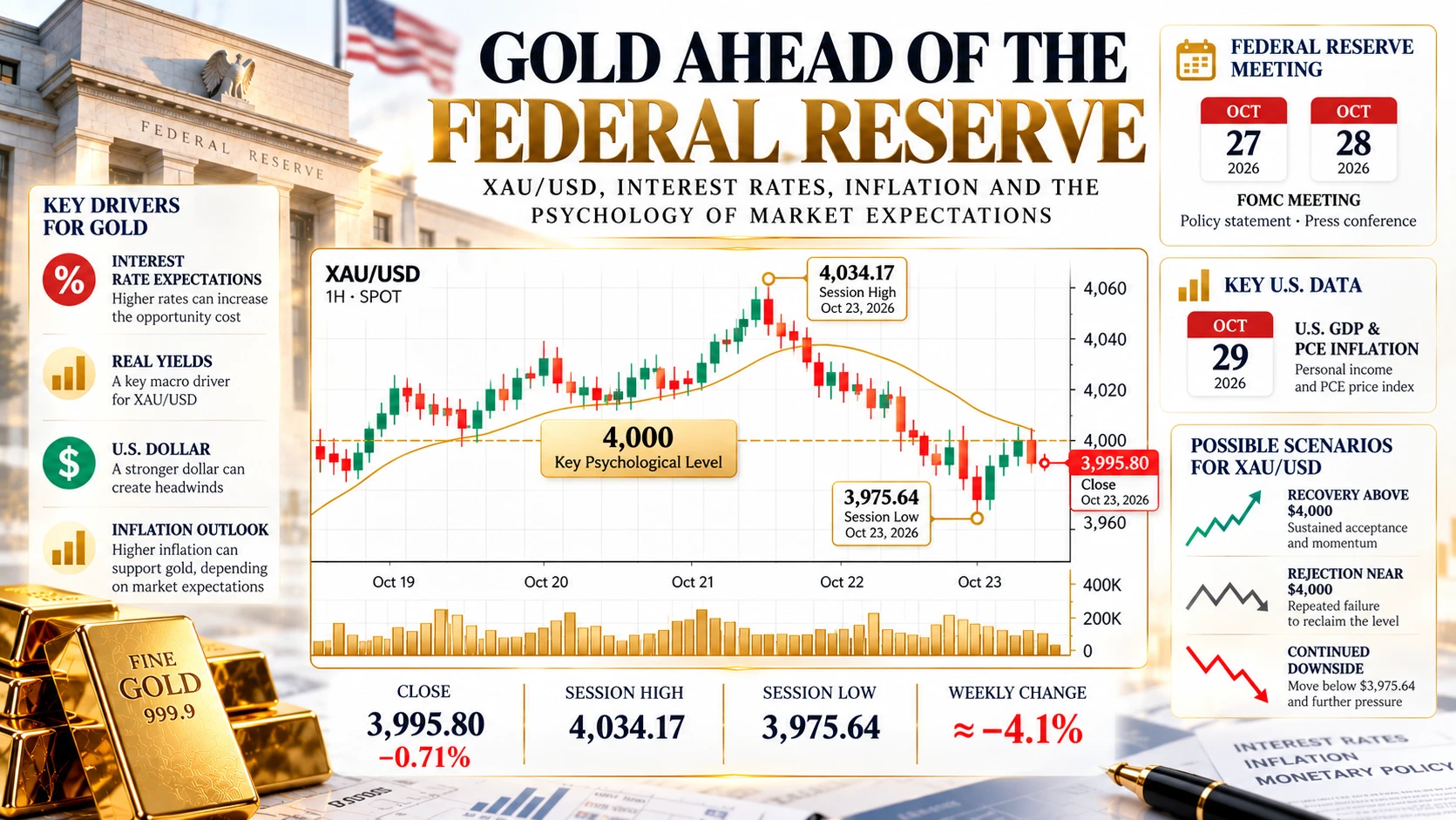
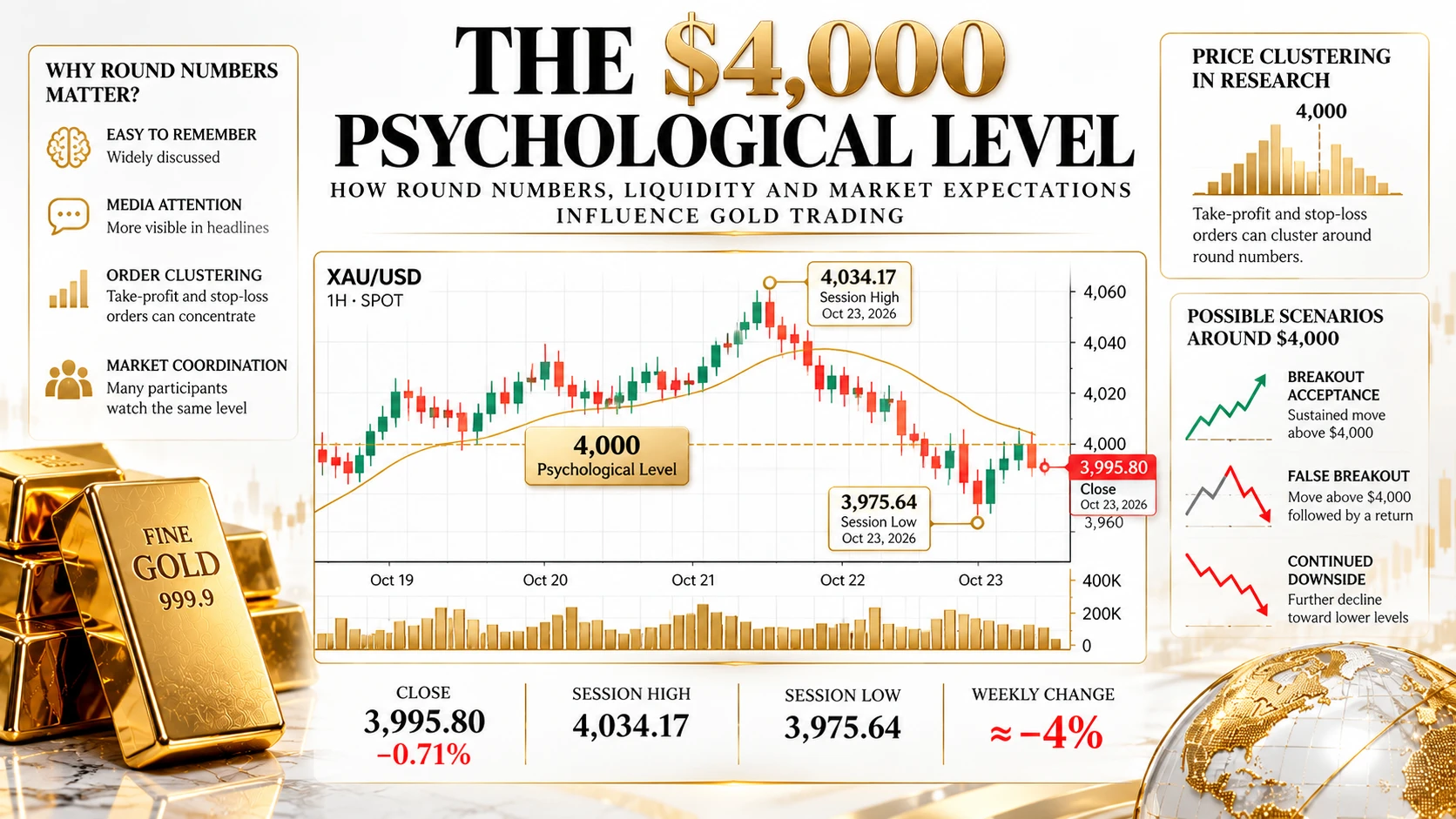
NSI is a proposed research framework, not an independently validated medical or financial prediction system. This article is research and education, not individualized medical or investment advice. Market observations are timestamped historical context, not live prices.
 Market
 Market
 Research