

A fixed portfolio can generate different psychological experiences
Imagine two investors with the same gold exposure and the same overall investment horizon. One checks the position after every small price change. The other receives a consolidated statement at an agreed interval. Neither investor has changed the metal, leverage or fundamental economic exposure, yet they experience different samples of gains and losses. A short evaluation period creates many opportunities to notice negative fluctuations, whereas a longer period aggregates changes that may offset one another. The mechanism concerns how feedback is sampled and evaluated, not whether watching a chart changes the market. Gneezy and Potters tested evaluation periods in an investment-like laboratory setting and found that more frequent evaluation could reduce willingness to take risk [1]. Thaler and colleagues separately investigated the interaction of loss aversion and evaluation frequency, finding behavior consistent with myopic loss aversion under their experimental conditions [2]. Those results are about controlled choices among experimental payoffs. They should not be sold as proof that a gold trader who stops checking prices will automatically earn more money.
This distinction matters because repeated checking can be rational for a leveraged or time-sensitive position. A margin constraint, stop-loss rule, exposure limit or scheduled announcement may require monitoring. A physical gold investor with a multi-year allocation could have a very different information need. Calling all frequent monitoring irrational ignores the contract, liquidity and decision horizon. The scientific question is narrower: when the objective need for information is held constant, can evaluation frequency influence felt loss, emotional salience and later decisions?
Where the feedback interval enters judgment
A loss becomes psychologically available when it is noticed, labelled and compared with a reference point. Frequent monitoring increases the number of comparisons with yesterday's close, the last purchase price or the prior screen refresh. Such comparisons can cause a person to focus on a short loss even if the investment thesis is measured over a longer period. But the opposite is also possible: some users become comfortable with volatility when frequent observation removes surprises. The evidence therefore requires a specified population and task rather than a universal personality label. Experimental findings on myopic loss aversion offer a plausible behavioral mechanism, not a certified intervention for financial performance [1][2]. A proper study of gold investors would randomize or otherwise credibly assign observation frequency, ensure that information content remains comparable, and record subsequent decisions before outcomes are known. It would distinguish discretionary allocation choices from trades forced by margin or contractual obligations. The dependent variables should include risk judgments, order frequency, rule deviations and realized costs, not only whether participants reported feeling calmer.
Behavioral finance research also warns against treating turnover or activity as evidence of skill. Barber and Odean documented that excessive trading in a historical brokerage sample was associated with weaker net results [3]. That study concerns investor behavior and transaction costs, not a direct experiment in chart-monitoring frequency, and its sample cannot be assumed representative of current gold markets. Its relevance is methodological: activity and profitability are separate measurements. A user who checks more may trade more, but the link needs to be observed, not narrated.
A practical protocol without a false recommendation
One could design a decision journal that records why a price observation was necessary. Was it required to manage open risk, respond to a pre-registered event or simply reduce uncertainty? The journal should also record planned action, the information available at the time and whether the observer actually revised a material forecast. Separating 'checking' from 'deciding' would permit analysis of how much screen time generated usable information. The exercise is an aid to reflection, not a medical assessment of anxiety. To test whether a different checking schedule helps, compare behavior over equivalent market conditions, recognize that different market phases create different opportunities, and count missed risk-management obligations as costs. An intervention that reduces subjective distress but causes a trader to miss critical collateral information cannot be labelled an improvement. Conversely, an intervention that reduces unnecessary trades while preserving risk checks may merit more study. Both possibilities must be measured, and the user should choose the schedule appropriate to their financial obligations.
The conclusion is not to turn off a trading terminal or to watch a portfolio continuously. It is that feedback frequency is part of the decision environment, and experiments show that evaluation periods can change choices under specified conditions [1][2]. Transaction costs add another independent dimension [3]. NSI.GOLD can study observation patterns and decision quality, but it has not established an individualized physiological or financial prediction rule. The strongest practice is to make the purpose of each observation explicit before drawing psychological conclusions from screen time.
Scientific bibliography & sources
- [1] Gneezy U, Potters J. An Experiment on Risk Taking and Evaluation Periods. Quarterly Journal of Economics (1997). https://doi.org/10.1162/003355397555217
- [2] Thaler RH, Tversky A, Kahneman D, Schwartz A. The Effect of Myopia and Loss Aversion on Risk Taking: An Experimental Test. QJE (1997). https://doi.org/10.1162/003355397555226
- [3] Barber BM, Odean T. Trading Is Hazardous to Your Wealth: The Common Stock Investment Performance of Individual Investors. Journal of Finance (2000). https://doi.org/10.1111/0022-1082.00226
Research note
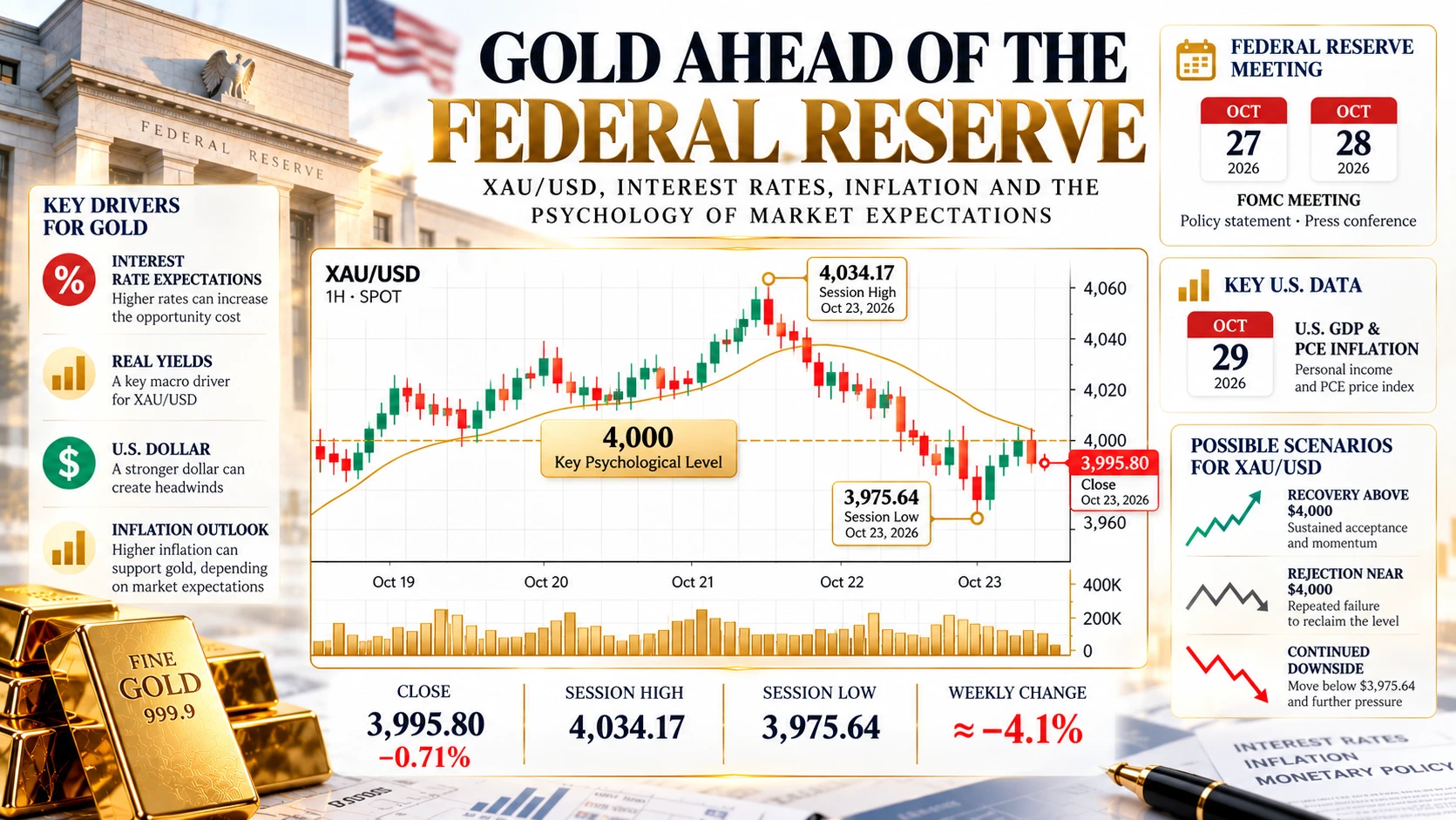
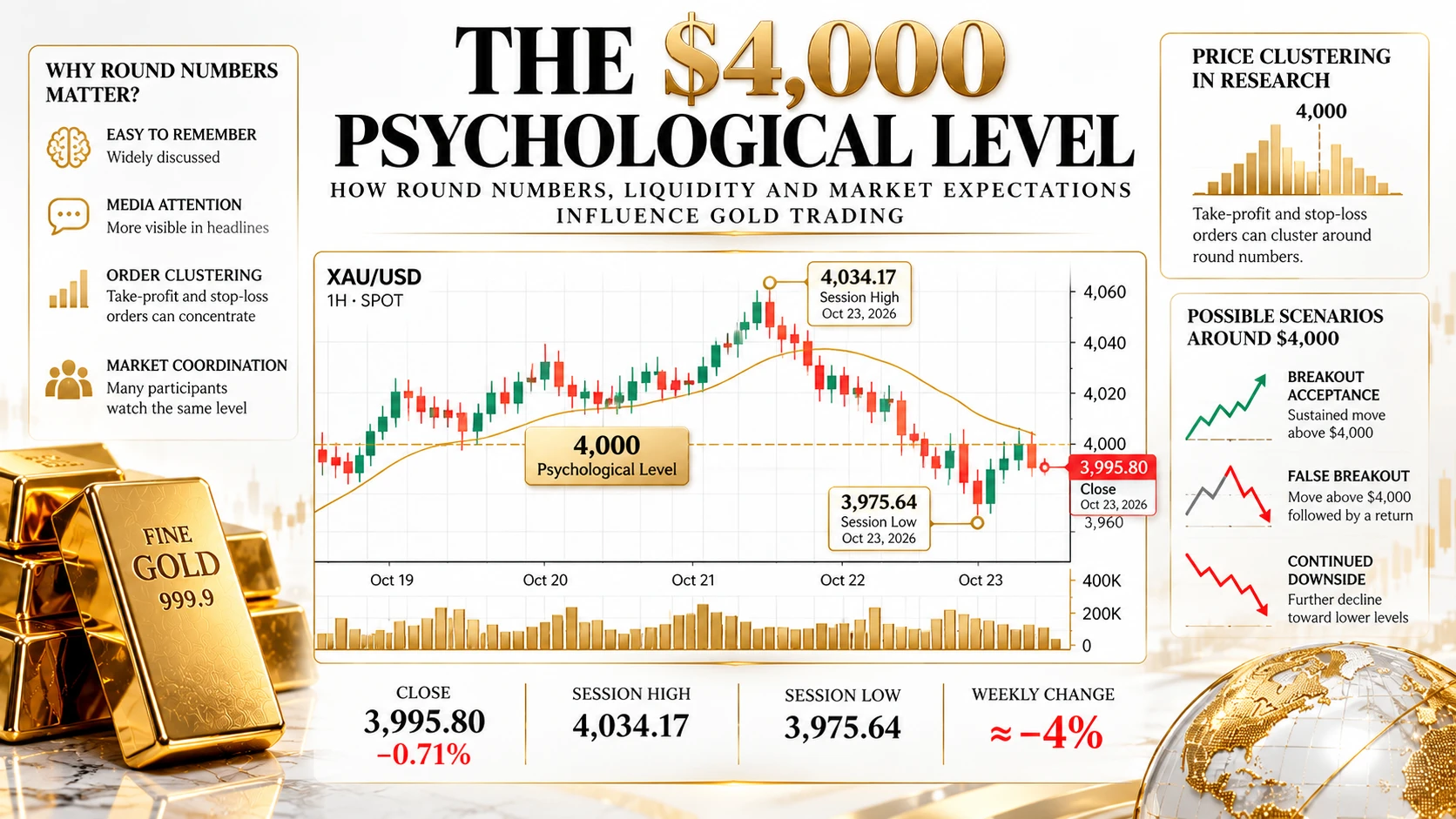
NSI is a proposed research framework, not an independently validated medical or financial prediction system. This article is research and education, not individualized medical or investment advice. Market observations are timestamped historical context, not live prices.
 Market
 Market
 Research