
A notification can be an event without a click
A trader is checking whether a gold move began before or after an economic release. Several charts are open, with timestamps, contract names and a hypothesis recorded in working memory. A phone vibrates. The person decides not to answer, then returns to the chart. It is tempting to say that no interruption happened because no message was opened. But the event may have triggered an orienting response or prompted thoughts about the message sender. What matters to the reasoning task is not only the duration of phone use but whether the original sequence of operations was preserved.
Stothart, Mitchum and Yehnert experimentally examined the attentional cost of receiving mobile-phone notifications, finding performance disruption under laboratory conditions even without active phone interaction [1]. This does not establish that a particular notification causes trading losses or that the brain can be ranked by a single alert response. It establishes a narrower and useful principle: external signals may consume limited attention even when a person intends to ignore them. The effect must be measured in the actual task and population before translating it into a financial claim. Rubinstein, Meyer and Evans investigated executive control in task switching [2]. Their work explains why changing tasks can impose costs beyond the time used to perform the alternative task. In market analysis, recovering the original goal matters as much as re-opening the chart. An interrupted analyst may remember the conclusion but not the qualification that limited it, or may reopen the latest candle and forget the event timestamp originally selected. Such errors are plausible consequences of disrupted workflow, not experimentally proven gold-market responses.
The hidden loss may be the question being asked
An alert can change the information hierarchy. Before interruption, the analyst may be testing whether a price change was statistically unusual for the relevant hour. After interruption, a social message claiming 'gold just exploded' might shift the task toward finding a dramatic explanation. This is not simply lost concentration; it is possible goal substitution. Because the new prompt feels urgent and socially meaningful, the analyst may accept a different standard of evidence. A trading interface that combines research alerts with popularity counters can therefore alter the decision environment without changing any market data. Ophir, Nass and Wagner studied cognitive control among people reporting different levels of media multitasking [3]. Their findings raise questions about managing competing information streams, but a correlational comparison does not demonstrate that reading market news causes a stable cognitive deficit. The distinction matters: an individual may multitask because of existing preferences or job requirements. Neither a questionnaire nor one laboratory result establishes that person's trading competence. Responsible application requires task-specific experimental testing.
The relevant outcome should be an observable error, not a vague neurological label. Did the analyst lose a timestamp, use the wrong contract, fail to cite a source, skip a planned risk check or change the hypothesis after seeing the answer? A session log could distinguish interruptions that were operationally necessary from those that simply added new stimulation. It should also include false negatives: moments when an alert provided critical information that prevented a more serious mistake. Suppressing all signals is not necessarily good risk management.
Designing a calmer terminal without missing critical events
A practical interface can separate operational alarms from discretionary news. Margin breaches, system failures and confirmed high-impact releases have different urgency from commentary, social engagement and repetitive headlines. The user should know whether a notification represents a verified new event or a second interpretation of the same story. The classification can be recorded alongside the event timestamp and the particular task being interrupted. This makes it possible to measure information value rather than counting the number of pop-ups or treating every flash as actionable. An experiment could compare two equally informed terminal groups: one receives all noncritical alerts immediately; another receives batched alerts while critical safety notices remain immediate. Researchers would assess timestamp accuracy, rule adherence, perceived mental workload and the number of necessary information updates missed. Study designs must avoid assuming that fewer clicks prove better cognition. The objective is improved task performance under a specified constraint, not creating the sensation of a quieter screen.
The conclusion is a boundary condition for product design. Laboratory evidence establishes that even an unattended notification can compete for attention [1], and executive-control research documents task-switching costs [2]. Media-multitasking results add a qualified, noncausal observation [3]. None validates a predictive 'alert sensitivity' score for gold prices or proves that turning off phone notifications increases trading profits. NSI.GOLD should treat notification design as a measurable human-factors question: what information is lost or gained when the original decision task is interrupted?
Scientific bibliography & sources
- [1] Stothart C, Mitchum A, Yehnert C. The attentional cost of receiving a cell phone notification. JEP:HPP (2015). https://pubmed.ncbi.nlm.nih.gov/26121498/
- [2] Rubinstein JS, Meyer DE, Evans JE. Executive control of cognitive processes in task switching. JEP:HPP (2001). https://pubmed.ncbi.nlm.nih.gov/11518143/
- [3] Ophir E, Nass C, Wagner AD. Cognitive control in media multitaskers. PNAS (2009). https://doi.org/10.1073/pnas.0903620106
Research note
NSI is a proposed research framework, not an independently validated medical or financial prediction system. This article is research and education, not individualized medical or investment advice. Market observations are timestamped historical context, not live prices.
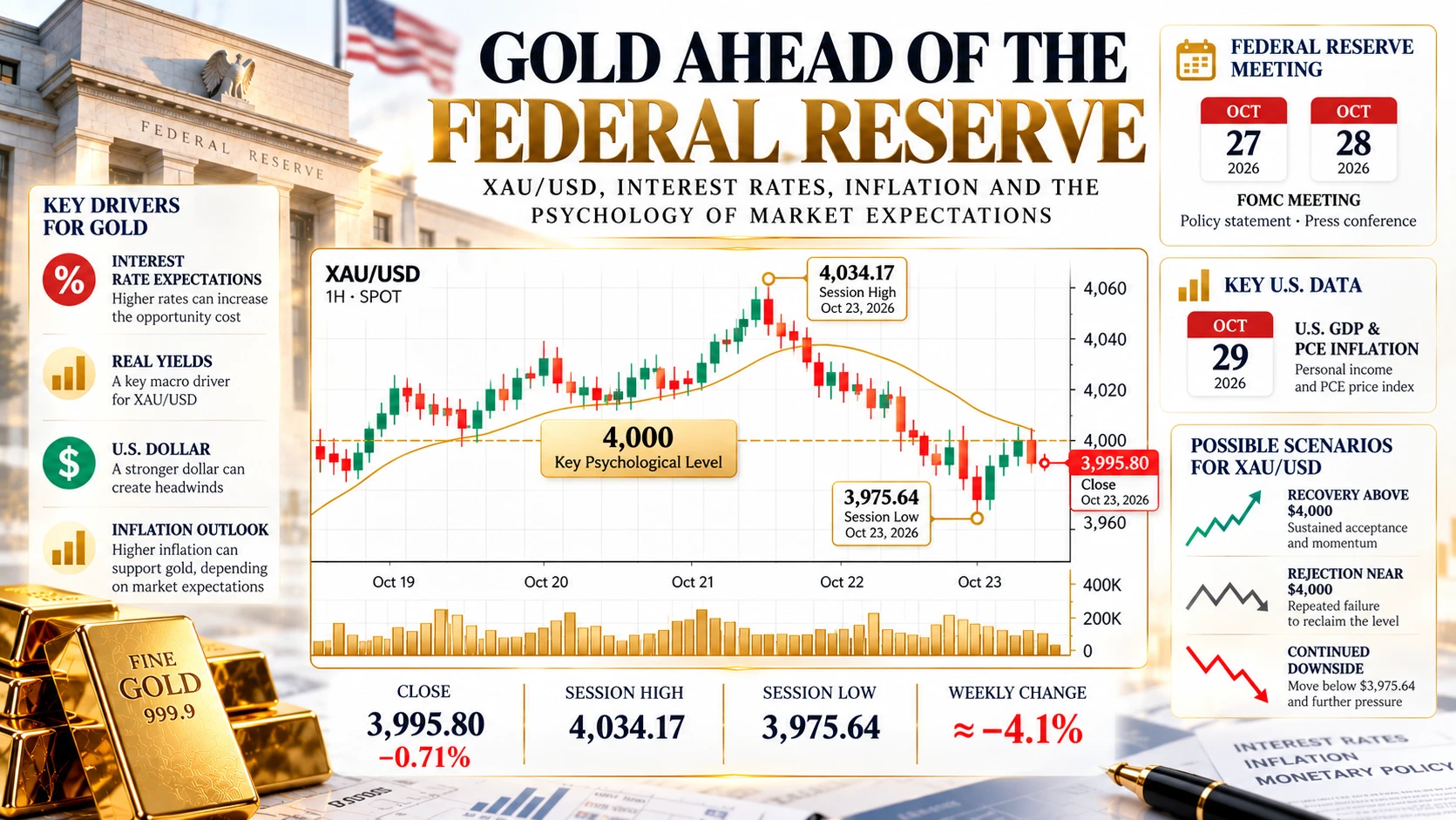 Market
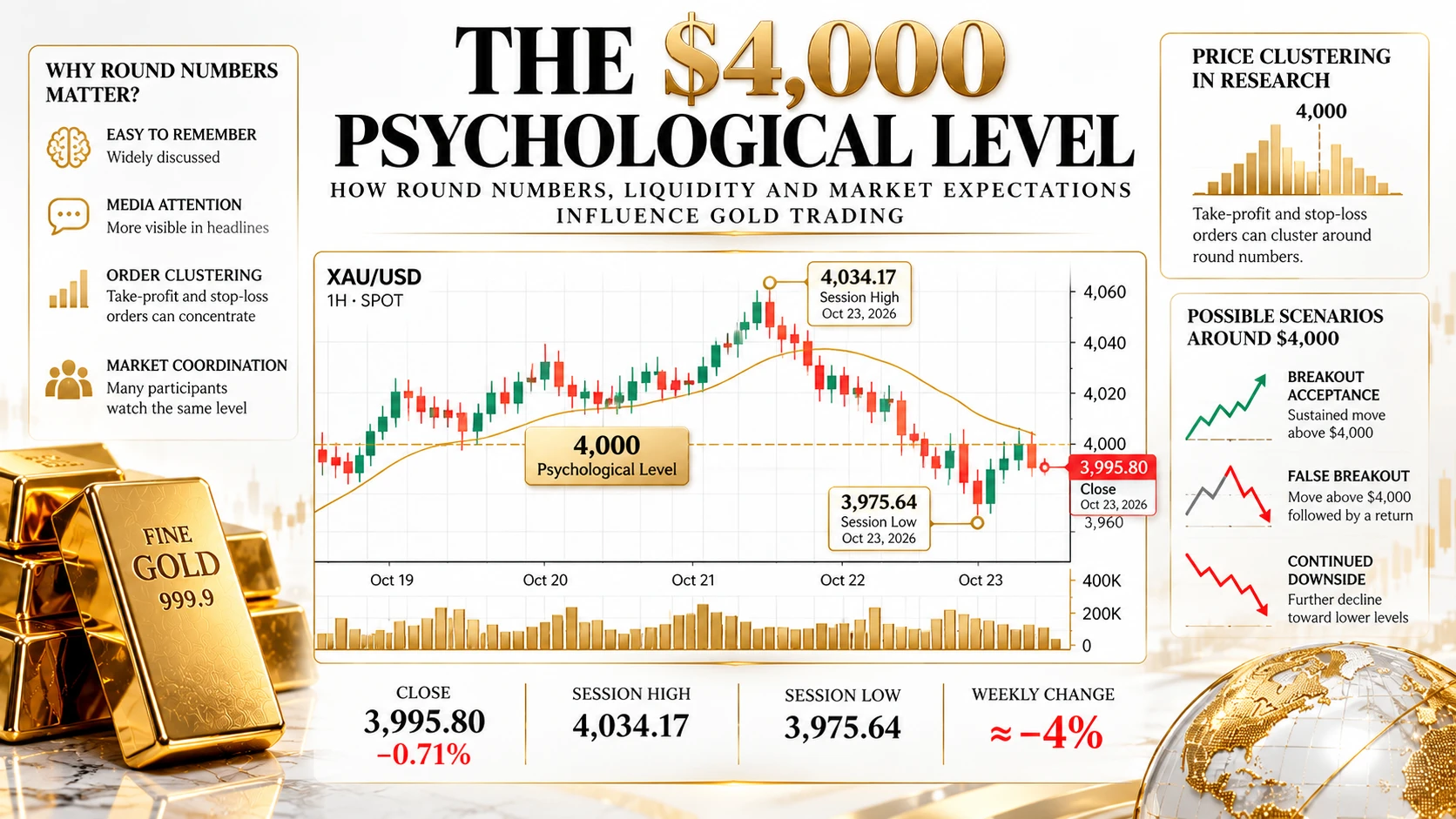 Market
 Research