

The research question: which outcome changes under deliberate breathing?
A breathing exercise can alter the immediate experience of arousal without necessarily altering the probability that a future market forecast is correct. Those are two claims separated by several causal steps. The first can be studied with recorded respiration, heart rate, subjective mood and attention tasks. The second would require an independently designed financial experiment. Confusion develops when a useful physiological technique is presented as though it directly improves entry timing or risk-adjusted returns. A responsible neurofinance article asks whether a breathing intervention produces measurable changes, under which conditions, and how long they last. It then explicitly marks the boundary at which experimental evidence ends and speculation about trading begins.
Balban and colleagues conducted a randomized comparison of several brief daily breathing techniques and mindfulness meditation over one month, reporting improvements in mood and some physiological outcomes, with particularly promising results for exhale-focused cyclic sighing [1]. Their studied endpoints were not gold-price predictions, market risk or trading execution. A finding about mood or respiratory rate is meaningful on its own; attaching a speculative financial benefit does not strengthen it. The intervention was remote and behaviorally structured, leaving important questions about participant adherence, population differences and the durability of effects under exceptional stress. Those qualifications belong in the interpretation rather than being hidden after the headline.
Attention, cortisol and respiration are different measurements
Ma and colleagues randomized forty participants to a diaphragmatic-breathing program or a control condition and examined attention, negative affect and cortisol over eight weeks [2]. They observed improvements on selected measures, but the research design did not define a 'trade quality' endpoint. Attention tasks are bounded experimental instruments, and changes in cortisol are influenced by timing, context and sampling protocols. It would be an error to present a lower value as a direct diagnosis of superior judgment. The study supports a research program in which an intervention and its outcomes are separately measured. It does not justify converting a physiological shift into a causal explanation for a later market gain.
Autonomic physiology also resists simplistic dashboard interpretation. Lehrer and colleagues examined relationships between heart rate and respiration during resonance-frequency breathing and showed why their phase relationship is not universally fixed [3]. A wearable can report a moving number without revealing the mechanism that generated it. Respiration rate, posture, measurement artifact and the analysis window can influence the observed pattern. A trader looking at a visibly improved heart-rate-variability display after a breathing exercise might reasonably report subjective calm, yet the instrument does not independently prove risk discipline, executive control or future returns. A mechanism becomes persuasive only when the measurement and comparison conditions are specified.
Microbreaks and Attention is a related research area but a different intervention. Leaving a screen, changing a task and breathing deliberately may share a subjective sense of relief while involving distinct experimental procedures. Stress Changes Which Kind of Flexibility Works likewise reminds us that cognitive processes must not be treated as interchangeable simply because they are all affected by pressure. An NSI investigation should separate immediate state changes from skill acquisition and track whether any cognitive improvement generalizes to new tasks. Otherwise a favorable response on the trained exercise can masquerade as evidence for a much broader theory.
A design capable of identifying an effect
A meaningful protocol could randomize participants to guided breathing, a credible active comparison and ordinary rest, while predefining the primary outcome. It should capture respiration objectively when possible, blind assessors who judge performance, report nonadherence and include a follow-up sufficiently separated from the exercise. A second stage could test a narrowly defined decision task, such as adherence to a previously written rule under time pressure. Even then, market outcomes require a separate causal design because the price path can reward an undisciplined choice or punish a disciplined one. The distinction between process quality and realized profit must remain explicit.
The conclusion is that breathing practices have experimental evidence for changes in some arousal and attention outcomes, with important constraints on generalization. The evidence is not a validation certificate for NSI, and it supplies no personalized medical recommendation or gold buy/sell instruction. The useful scientific move is to state exactly which variable moved, which did not, and what would have to be measured next. Better internal regulation may be worth studying without pretending that the nervous system has become an oracle about XAU/USD.
Scientific bibliography & sources
- [1] Balban et al., Brief Structured Respiration Practices Enhance Mood and Reduce Physiological Arousal, 2023. https://pubmed.ncbi.nlm.nih.gov/36630953/
- [2] Ma et al., The Effect of Diaphragmatic Breathing on Attention, Negative Affect and Stress, 2017. https://pmc.ncbi.nlm.nih.gov/articles/PMC5455070/
- [3] Lehrer et al., Heart Rate and Breathing Are Not Always in Phase During Resonance Frequency Breathing, 2020. https://pubmed.ncbi.nlm.nih.gov/32285231/
Research note
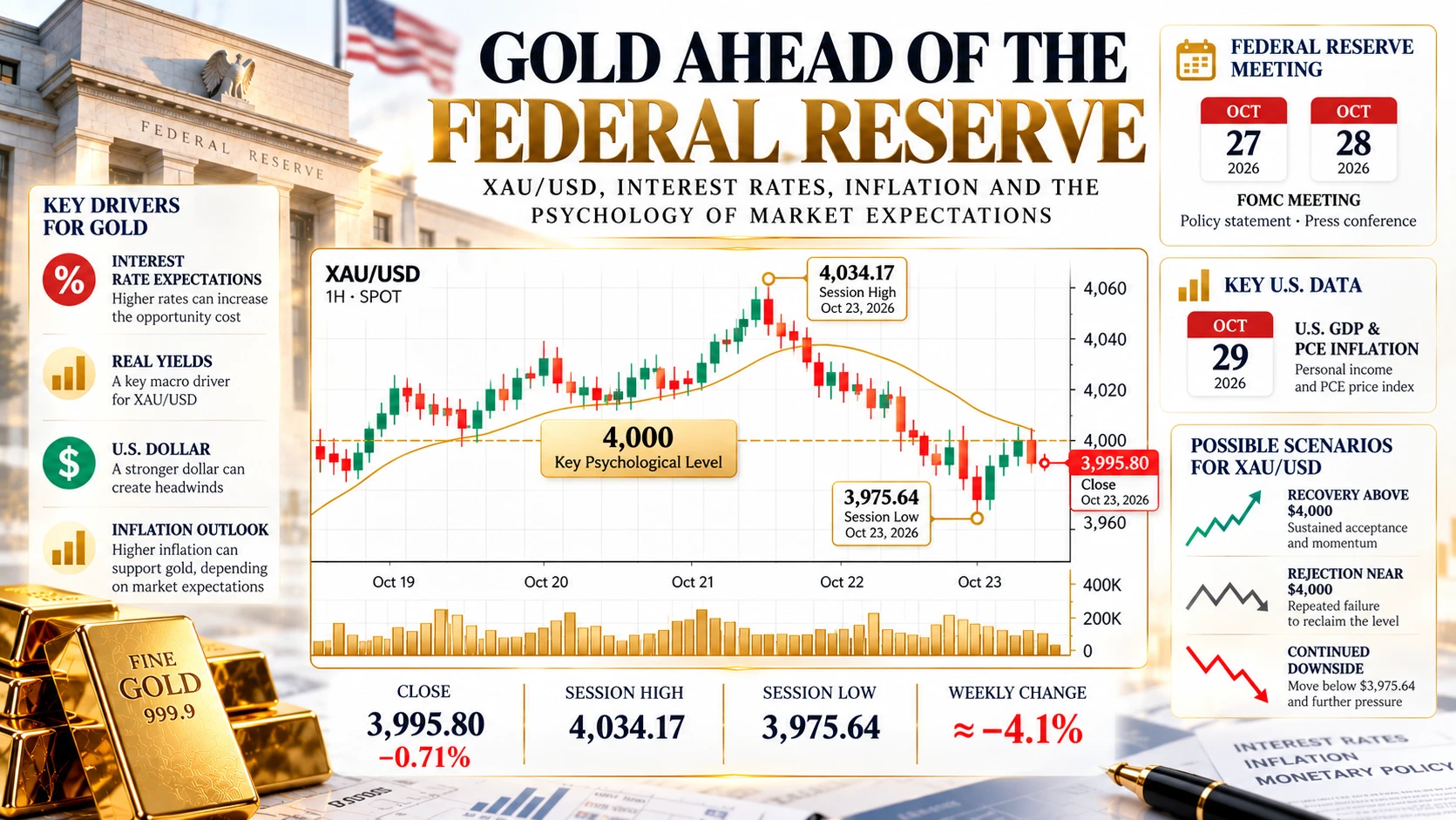
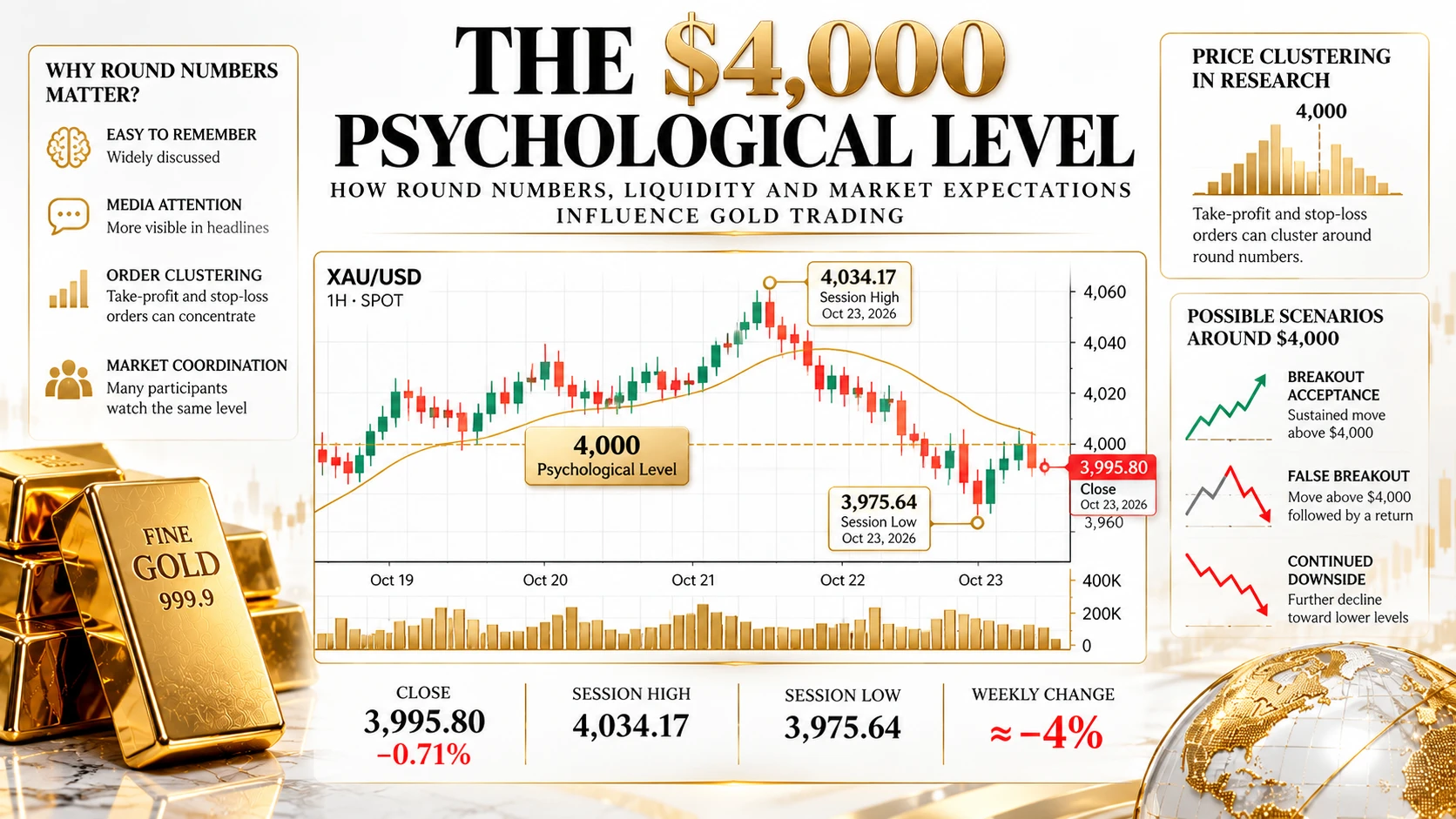
NSI is a proposed research framework, not an independently validated medical or financial prediction system. This article is research and education, not individualized medical or investment advice. Market observations are timestamped historical context, not live prices.
 Market
 Market
 Research